


 Facebbook
 Tiktok
 Youtube
 Zalo
Zalo Linkedin
 Cộng đồng đầu tư
 Instagram
India’s vegetable oil imports rose nearly 7% recently, reflecting stronger demand for soybean oil and highlighting how India continues to rely heavily on overseas supplies to meet its massive edible oil needs. As one of the world’s largest consumers of vegetable oils, India’s import trends are closely watched by traders, refiners, farmers, and food manufacturers alike. The latest increase signals not only shifting buying patterns but also the growing importance of soybean oil in the country’s edible oil basket.
India imports a large share of the vegetable oil it consumes because domestic production is not enough to keep up with demand. Population growth, rising incomes, urbanization, and changing diets have all contributed to higher consumption of cooking oils. In this environment, changes in import volumes can quickly affect domestic prices, refinery activity, and the outlook for global exporters such as Argentina, Brazil, Indonesia, Malaysia, and Ukraine.
Strong soybean oil demand drives the increase
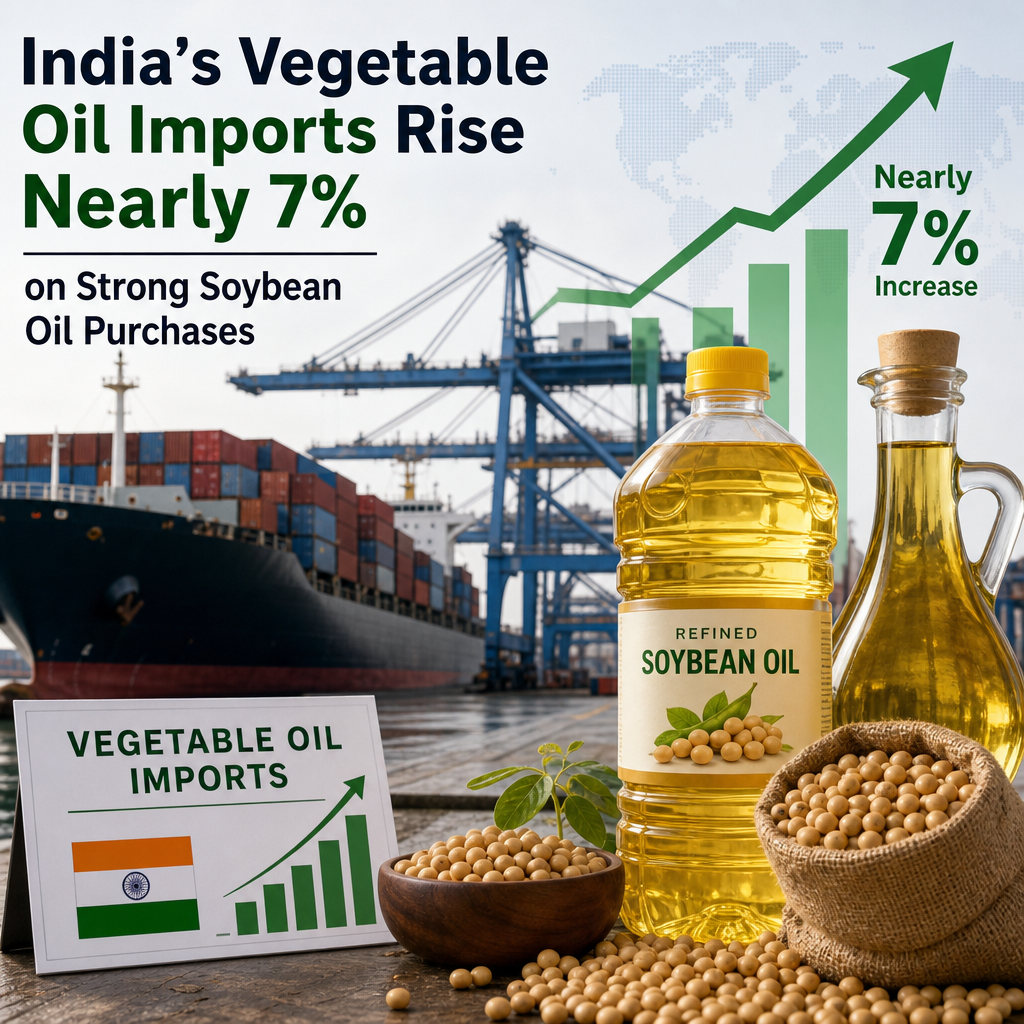
The main reason behind the rise in imports was stronger purchases of soybean oil. Soybean oil has become increasingly important in India because it is widely used in households, restaurants, and the food-processing industry. Buyers often prefer it when prices are competitive relative to other edible oils, especially palm oil and sunflower oil.
Several factors supported soybean oil buying. International supplies were available at attractive prices, and refiners looked to secure cargoes to maintain adequate stocks. In addition, uncertainties in other vegetable oil markets may have prompted importers to diversify their purchases. When one oil becomes more expensive or less available, traders often shift toward soybean oil to balance costs and ensure steady supply.
Soybean oil’s appeal also comes from its versatility. It is used in a broad range of cooking applications and is a key ingredient in packaged foods, snacks, and prepared meals. As India’s processed food market expands, demand for soybean oil tends to rise alongside it. For a broader view of supply and pricing pressures, see Vegetable Oils Market: Risks and Opportunities Ahead.
India’s dependence on imported edible oils remains high
Despite being a major agricultural economy, India still depends heavily on imports for edible oils. Domestic oilseed production has improved over the years, but it has not kept pace with consumption. As a result, imports play a central role in meeting national demand.
Palm oil remains an important import because of its lower cost and widespread use, while soybean oil and sunflower oil add diversity to the supply mix. Together, these oils make up the bulk of India’s vegetable oil imports. The latest nearly 7% rise suggests that even modest changes in global pricing or supply conditions can influence buying patterns significantly.
This dependence creates both opportunities and risks. On the one hand, India can tap multiple suppliers and adjust import volumes based on price trends. On the other hand, the country is exposed to volatility in international markets, shipping disruptions, geopolitical tensions, and currency fluctuations. A weaker rupee, for example, can make edible oil imports more expensive and raise retail prices.
Global market conditions influenced buying decisions
India’s import behavior does not happen in isolation. It is closely linked to developments in the global edible oil market. When soybean oil prices are competitive, Indian buyers tend to increase purchases. When palm oil or sunflower oil becomes relatively more expensive, buyers shift accordingly.
Recent global supply conditions likely played an important role in the higher import volume. Harvest expectations, export availability, freight costs, and weather-related risks all affect oilseed and vegetable oil markets. If supply in one exporting region is tight, importers in India may look elsewhere to secure volumes. The latest trade update from UkrAgroConsult’s market report on India’s imports points to the same pricing and supply dynamics.
The growth in soybean oil imports also reflects India’s strategy of maintaining a balanced import basket. By sourcing different oils from multiple origins, the country can reduce reliance on any single product or supplier. This helps improve supply stability, especially in times of global uncertainty.
Impact on domestic prices and refiners
Higher imports can have a direct effect on domestic vegetable oil prices. When more cargoes arrive and supplies become more comfortable, retail and wholesale prices may come under pressure. This can benefit consumers and food companies that rely on edible oils as a key input.
For refiners and importers, the increase in soybean oil purchases may improve inventory availability but can also create margin pressure if global prices rise after cargoes are booked. Refiners must carefully manage timing, procurement, and storage to remain profitable in a highly competitive market.
The price relationship between soybean oil and other edible oils also matters. If soybean oil becomes cheaper than palm oil on a landed-cost basis, buyers may increase soybean oil imports further. Conversely, if global soybean oil prices climb, demand may shift back toward palm oil or other alternatives.
What the rise means for consumers and the food sector
For Indian consumers, the rise in vegetable oil imports is important because it can influence everyday food costs. Cooking oil is a staple in nearly every household, so even small changes in prices can affect monthly expenses. Stable imports can help reduce the risk of sharp price spikes, especially during periods of domestic supply shortages.
The food-processing sector also benefits from dependable edible oil availability. Manufacturers of fried snacks, baked goods, ready-to-eat meals, and packaged foods need consistent input supplies to maintain production schedules and manage costs. A larger flow of soybean oil imports can support these industries by improving supply certainty.
At the same time, dependence on imports means Indian consumers remain vulnerable to events beyond the country’s control. Weather shocks in South America, export policy changes in Southeast Asia, or disruptions in Black Sea trade can all influence edible oil prices in Indian markets.
Policy and agricultural implications
The rise in imports also raises questions about India’s long-term edible oil strategy. Policymakers have repeatedly emphasized the need to boost domestic oilseed production to reduce import dependence. Programs aimed at improving crop yields, expanding acreage, and supporting farmers are part of that effort.
Soybean, mustard, groundnut, sunflower, and other oilseed crops could play a larger role in reducing import reliance over time. However, achieving meaningful self-sufficiency is challenging. Farmers often face profitability constraints, and edible oil demand continues to grow faster than domestic supply.
In the meantime, imports will remain essential. That makes efficiency in procurement, logistics, and storage increasingly important. Better forecasting and smarter trade planning can help India manage price swings and supply disruptions more effectively.
Outlook for vegetable oil imports
The recent nearly 7% rise in India’s vegetable oil imports suggests that demand remains resilient and that soybean oil will continue to play a major role in the country’s edible oil market. If global soybean oil prices stay competitive, imports could remain firm in the near term. Much will depend on harvest outcomes, export availability, and the relative pricing of palm, soybean, and sunflower oils.
For India, the key challenge is balancing consumer affordability with supply security. Strong imports can help keep the market supplied, but they also reinforce the country’s exposure to global volatility. As demand for edible oils continues to grow, soybean oil purchases are likely to remain an important part of India’s strategy to meet the needs of households and industry.
In the broader picture, the increase is a reminder of how interconnected India’s food economy is with global agricultural markets. A shift in buying patterns for one oil can ripple across shipping routes, trading desks, refinery margins, retail prices, and farm policy. As long as domestic production trails consumption, India’s vegetable oil imports will remain a critical indicator of food inflation, trade flows, and market confidence.