


 Facebbook
 Tiktok
 Youtube
 Zalo
Zalo Linkedin
 Investment community
 Instagram
|
WTI Crude Oil - NYMEX |
|||
| Size | Full | Mini | Micro |
| Exchange | New York Mercantile Exchange ( NYMEX ) | New York Mercantile Exchange (NYMEX) | New York Mercantile Exchange ( NYMEX ) |
| Commodity code | CLE | NQM | MCLE |
| Contract lot value (market price) | Commodity price * contract size | Commodity price * contract size | Commodity price * contract size |
| Contract size | 1,000 barrels | 500 barrels | 100 barrels |
| Margin (changes according to MXV) | 10% of contract lot value | 10% of contract lot value | 10% of contract lot value |
| Trading price step | 0.01 ~ $10/lot | 0.025 ~ $12.5/lot | 0.01~ $1/lot |
| Quoted unit | usd/barrel | usd/barrel | usd/barrel |
| Profit/loss fluctuation 1/lot | $1,000 | $500 | $100 |
| Trading month | 12 months | 12 months | 12 months |
| Trading hours | Monday – Friday | Monday – Friday | Monday – Friday |
| Trading session
(winter opens 60 minutes late) |
05:00 – 04:00 (next day) | 05:00 – 04:00 (next day) | 05:00 – 04:00 (next day) |
| Price range | Not specified | Not specified | Not specified |
| Quality standard | According to WTI crude oil standard on the Nymex commodity exchange | According to WTI crude oil standard on the Nymex commodity exchange | According to WTI crude oil standard on the Nymex commodity exchange |
| Delivery Registration Date | According to MXV regulations | According to MXV regulations | According to MXV regulations |
| First notice day | According to MXV regulations | According to MXV regulations | According to MXV regulations |
| Last trading day | Before the 25th of the month prior to the expiration month, 3 working days | Before the 25th of the month prior to the expiration month, 4 working days | Before the 25th of the month prior to the expiration month, 4 working days |
| Payment method | No physical delivery | No physical delivery | No physical delivery |
I. Overview of Crude Oil
1. General Introduction to Crude Oil
Crude oil is often referred to as the world’s “black gold.” It is one of the most important and widely used energy sources globally and has a direct impact on economic growth. Crude oil and its refined products are extensively used in transportation, as well as serving as essential inputs for industrial production.
According to data from the International Energy Agency (IEA, 2025), crude oil accounts for approximately 33% of total global energy consumption, while other sources include coal (27%), natural gas (24%), nuclear energy (5%), and renewable energy (11%) (according to iea.org).
2. Crude Oil Production and Refining Process
2.1 Crude Oil Extraction
- Crude oil is extracted from onshore and offshore oil wells using advanced drilling technologies and artificial lift systems.
- After extraction, crude oil is transported to refineries via pipelines, oil tankers, or tanker trucks.
2.2 Refining and Processing
Crude oil contains various components that are separated and processed under different temperature and pressure conditions to produce:
- Liquefied petroleum gas (LPG)
- Gasoline and diesel
- Jet fuel and railway fuel
- Industrial feedstocks
- Bitumen for construction purposes
2.3 Storage and Distribution
- Final products are classified, stored in terminals, and distributed to fuel stations, industrial facilities, or export ports.
- Inventory management and transportation logistics directly affect pricing and supply availability.
3. Products Derived from Crude Oil
Crude oil serves as a fundamental input for producing:
- Gasoline, diesel, and jet fuel – accounting for the majority of global energy consumption.
- Industrial materials – plastics, chemicals, and synthetic rubber.
- Bitumen, kerosene, and liquefied gases.
These sectors are closely correlated with overall economic performance: when economic growth accelerates, crude oil demand rises; conversely, during economic downturns, demand declines.
II. Factors Influencing Crude Oil Prices
1. Supply and Demand Dynamics
Global Economic Conditions
In 2020, the global economy was severely impacted by the COVID-19 pandemic, causing sharp declines across all energy commodities. Crude oil prices even fell into negative territory, while natural gas prices dropped by approximately 50% compared to late 2019. Agricultural commodities also declined, though to a lesser extent (around 10–15%).
In 2021, economic recovery supported by strong government stimulus measures drove energy commodity prices significantly higher.
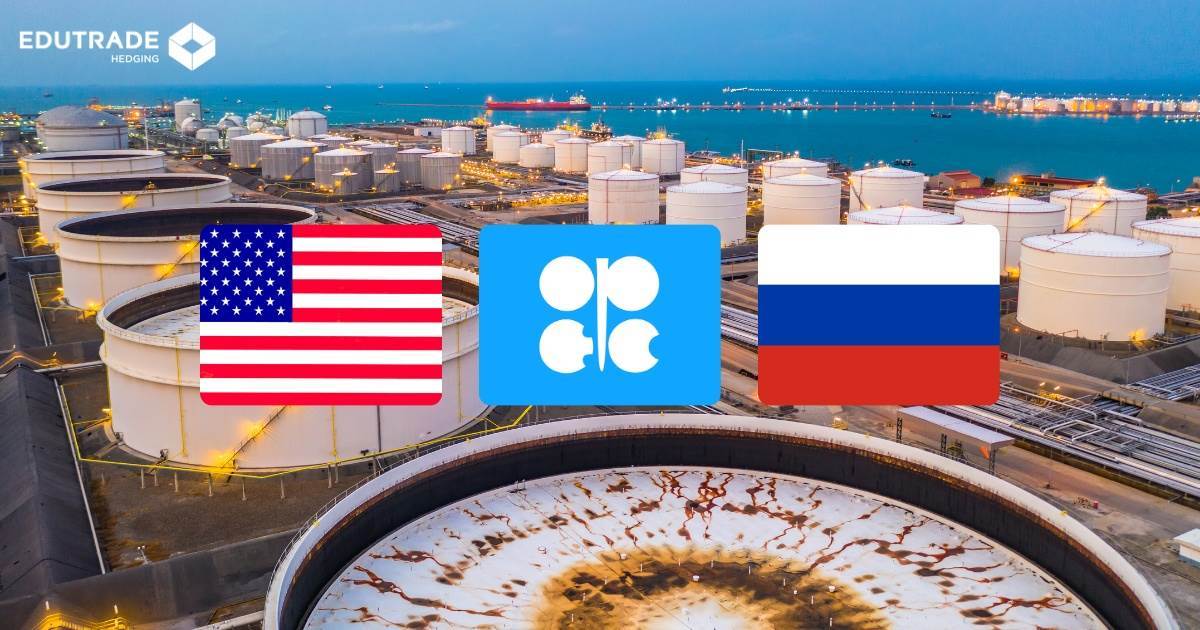
- Major oil-producing countries: OPEC+, the United States, and Russia play decisive roles in determining global supply.
- Major oil-consuming countries: The United States, China, India, Japan, and the European Union.
Oil prices tend to move in correlation with global GDP trends: when global GDP rises, oil prices increase, and vice versa.
2. U.S. Dollar Index
The U.S. Dollar Index typically exhibits an inverse relationship with crude oil prices. Therefore, investors should closely monitor news related to policy decisions by the U.S. Federal Reserve to assess potential movements in the USD.
3. Seasonality and Cyclical Patterns
- Summer: Increased travel and transportation demand leads to higher oil consumption and rising prices.
- Winter: Heating demand in the Northern Hemisphere increases, particularly for diesel and heating oil.
4. Alternative Energy Sources
Clean and renewable energy sources are increasingly being developed to replace fossil fuels such as crude oil in order to reduce environmental pollution. Renewable energy sources—including solar, wind, and biomass—are expanding rapidly, thereby affecting long-term crude oil demand.
When oil prices become excessively high or supply is constrained, alternative energy sources are more widely utilized, helping to stabilize oil prices.
5. Other Influencing Factors
Unexpected events such as hurricanes, natural disasters, wars, political instability, or disruptions like vessel blockages in the Suez Canal can interrupt global crude oil production and supply chains, thereby exerting upward pressure on oil prices.
III. Strategies for Effective Investment
1. Understanding the Product and Trading Rules
- Gain a thorough understanding of the quality standards and key technical specifications of Brent and WTI crude oil.
- Understand the contract specifications and maturities of crude oil futures traded on ICE Futures Europe (Brent) and NYMEX (WTI).
- Monitor key market indicators such as open interest, crude oil inventories, refinery utilization rates, and the futures price curve (forward curve) to assess price trends.
2. Utilizing Risk Hedging Instruments
Crude oil futures contracts are essential tools for:
- Refineries: Locking in crude oil purchase prices to forecast production costs.
- Transportation and logistics companies: Protecting fuel expenses against oil price volatility.
- Hedge funds and financial investors: Managing risk exposure and capitalizing on oil price fluctuations.
3. Staying Updated on News and Policy Developments
- Crude oil prices are directly influenced by energy policies, international sanctions, fuel standard adjustments, refinery operations, and geopolitical events.
- Investors should closely follow economic news, production decisions by OPEC+ and the United States, as well as weekly crude oil inventory reports from agencies such as the EIA and IEA to anticipate price movements.
4. Suitable for High-Risk Investors
- Brent and WTI crude oil are highly volatile products, making them suitable for investors with a high risk tolerance.
- Investors should assess their risk capacity, start with smaller capital allocations, and gradually scale up as experience increases.
- Short-term trading strategies (swing or intraday trading): Leveraging intraday or short-term price fluctuations to generate profits from crude oil price movements.
5. Consulting Edu Trade Experts
- Edu Trade is a leading and reputable member of the Vietnam Mercantile Exchange (MXV), specializing in commodity investment advisory services.
- With more than 10 years of hands-on experience, Edu Trade’s experts provide timely and accurate market insights, enabling investors to identify potential opportunities and make informed investment decisions.
Edu Trade regularly organizes investment training programs to enhance commodity trading knowledge and skills for investors. Furthermore, investors can receive in-depth consultation from Edu Trade specialists to develop effective investment strategies and minimize unnecessary risks during trading activities.
Edu Trade hopes that the above information has helped investors gain a clearer understanding of WTI Crude Oil (CLE).
Hiện tại nhóm sản phẩm Năng lượng đang không được giao dịch trên MXV. Nếu bạn đang muốn tham gia vào thị trường hàng hóa phái sinh hãy liên hệ ngay số Hotline: 0866.212.677 để được hỗ trợ tư vấn nhé!
Edu Trade – Leading Member of the Vietnam Commodity Exchange (MXV)

Nhận Định 13.09.2024 | Nhóm Nông Sản
#edutrade #giaodichhanghoa #dautuhanghoa Công ty cổ phần EDUTRADE tự hào là đơn vị tư…

Nhận Định 19.06.2024 | Nhóm Năng Lượng
#edutrade #giaodichhanghoa #dautuhanghoa Công ty cổ phần EDUTRADE tự hào là đơn vị tư…

Nhận Định 18.06.2024 | Nhóm Năng Lượng
#edutrade #giaodichhanghoa #dautuhanghoa Công ty cổ phần EDUTRADE tự hào là đơn vị tư…

Nhận Định 17/06/2024 – Nhóm Năng Lượng
#edutrade #giaodichhanghoa #dautuhanghoa Công ty cổ phần EDUTRADE tự hào là đơn vị tư…

Nhận Định 13/06/2024 – Nhóm Năng Lượng
#edutrade #giaodichhanghoa #dautuhanghoa Công ty cổ phần EDUTRADE tự hào là đơn vị tư…

Kiến thức hàng hóa – Phái Sinh Là…
#edutrade #giaodichhanghoa #dautuhanghoa Công ty cổ phần EDUTRADE tự hào là đơn vị tư …