


 Facebbook
 Tiktok
 Youtube
 Zalo
Zalo Linkedin
 Investment community
 Instagram
India’s rice stocks have surged to record levels, while wheat inventories have climbed to a five-year high, creating a rare moment of abundance in one of the world’s most important food markets. The latest stock build-up reflects a combination of strong procurement, favorable supply management, and steady government reserves, but it also raises new questions about storage capacity, export policy, food inflation, and how best to balance farmer support with consumer needs. For a country where grains are central to food security and public distribution, these unusually high inventories carry major economic and policy significance.
The rise in grain stocks comes at a time when global food markets remain sensitive to weather shocks, trade restrictions, and geopolitical disruptions. In India, where rice and wheat form the backbone of both household consumption and the public ration system, surplus stocks can be a strategic advantage. They help protect against shortages, stabilize prices, and support welfare programs. At the same time, excessive inventories can strain storage infrastructure, increase carrying costs, and complicate policy decisions about when and how much grain should enter the market.
For additional context on the latest figures, see this report on India’s grain stock levels.
India’s Rice Stocks Hit Record Highs
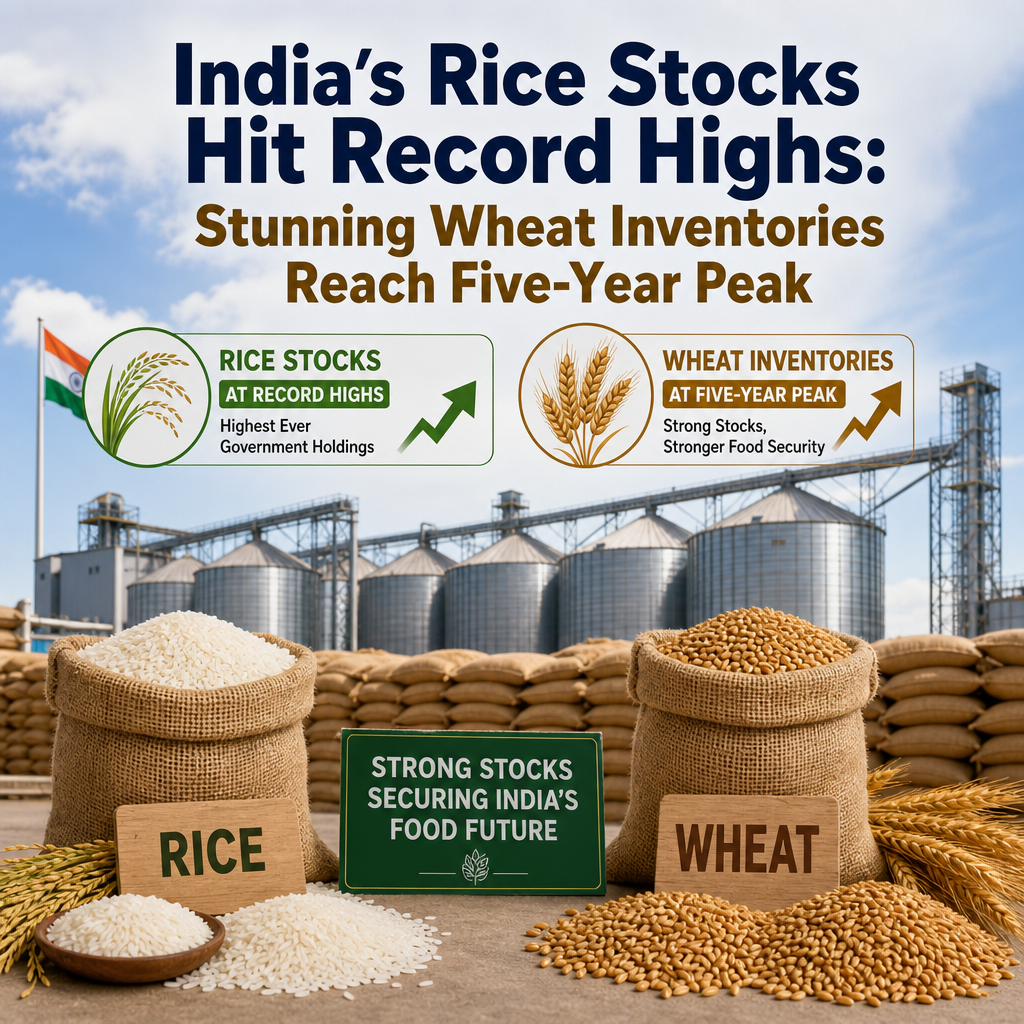
India’s rice reserves have reached unprecedented levels, underscoring the strength of government procurement and the scale of supply entering official warehouses. Rice has long played a central role in India’s food security framework, and the latest stock figures suggest the country is sitting on a substantial cushion.
A record rice stock position is generally seen as a positive indicator for food availability. It means the government has enough grain to meet distribution needs under the Public Distribution System, support welfare schemes, and respond to any sudden disruption in supply. In periods of erratic monsoons or regional shortages, large stocks provide a critical buffer. See also Công Ty CP Edu Trade for more resources.
However, high rice inventories are not without challenges. Storage facilities must handle the volume safely to prevent spoilage, pest damage, and quality deterioration. When stocks exceed practical warehousing capacity, open storage can become a problem, especially during humid or rainy periods. The bigger the reserves, the more important efficient stock rotation becomes.
Another implication of record rice stocks is pricing. Ample supply in government hands often helps contain market volatility, particularly if retail prices begin to rise in urban centers. Yet if procurement stays elevated while offtake remains slower, stocks can keep building even further. That can lead to policy pressure to encourage exports, release grain into the market, or adjust procurement targets in future seasons.
Wheat Inventories Reach a Five-Year Peak
Alongside rice, wheat inventories have climbed to their highest level in five years, signaling a significant recovery in available supply. Wheat is the other major staple in India, especially in northern and central regions, where it is essential for daily consumption through flour, roti, and other products.
A five-year peak in wheat stocks is important because wheat supplies have faced periodic stress in recent years. Weather-related losses, procurement fluctuations, and domestic price pressures have all influenced the market. Strong inventories now offer reassurance that the country has a firmer buffer heading into future harvest and consumption cycles.
These elevated wheat stocks may also help ease pressure on flour prices and reduce the risk of short-term inflation spikes. When stocks are tight, governments often need to intervene more aggressively to prevent price surges. A stronger stock position gives policymakers more room to maneuver.
Still, wheat surpluses bring their own set of concerns. If inventory levels remain high, storage and logistics costs rise. Managing wheat quality over long periods can be difficult, particularly when grain is stored across multiple facilities with varying standards. The longer stocks remain in the system, the greater the risk of losses due to moisture, handling, and transport inefficiencies.
Why Grain Stocks Matter for Food Security
India’s large grain reserves are not just a statistical milestone; they are central to national food security. Public grain stocks act as a stabilizing force during droughts, inflationary periods, supply chain disruptions, or unexpected crop losses. They support millions of households that rely on subsidized food grains through government programs.
High rice and wheat inventories also help the state maintain confidence in food supply. In a country with a vast and diverse population, even localized shortages can create broader market anxiety. Adequate reserves reduce that risk by ensuring the government can respond quickly.
In addition, grain stocks play an important role in social policy. Food distribution schemes often depend on consistent availability of stocks at the central level. When reserves are plentiful, implementation becomes smoother, and there is less risk of interruption in ration supply. This is especially important for low-income households, rural communities, and vulnerable populations.
The Storage Challenge
While record stocks may look reassuring on paper, the real test lies in storage capacity and management. India has long faced logistical challenges in grain handling, from warehouse shortages to transportation bottlenecks. When inventories rise faster than the storage network can adapt, the system becomes under strain.
Proper storage requires more than simply placing grain in warehouses. It involves temperature control, humidity management, pest prevention, and regular stock inspection. Without these safeguards, large reserves can deteriorate over time. That creates a hidden cost: the country may have abundant grain, but not all of it remains suitable for long-term use.
There is also the question of regional distribution. Stocks concentrated in a few locations may not be as useful as well-distributed reserves placed close to demand centers. Efficient movement from surplus areas to deficit areas is essential to making high inventories truly valuable.
Policy Choices Ahead
The current stock situation could influence several policy decisions in the coming months. Authorities may consider releasing more grain into the open market to ease prices, adjusting procurement activity, or revisiting export rules if domestic supply remains comfortable. Each option carries trade-offs.
Releasing grain can help reduce pressure on storage and keep consumer prices in check, but it may also reduce the cushion available for emergencies. Tightening procurement can ease stock build-up, but it may affect farmer incomes if market prices weaken. Encouraging exports can support external demand and reduce surplus, but only if domestic prices and welfare commitments remain protected.
Policy timing matters. If the government acts too slowly, storage pressure can worsen. If it moves too quickly, it may undermine the security benefits that large inventories are meant to provide. The ideal response is usually a balanced one: preserve enough reserves for safety while keeping the system lean enough to avoid waste.
Impact on Farmers and Consumers
For farmers, strong procurement and large stocks can be a sign of stable government demand. When the state buys actively, producers have a reliable outlet for their crops, especially in regions where market prices can be volatile. This support can improve income certainty and encourage continued production.
Consumers, on the other hand, benefit from the price stability that large grain stocks can bring. If supplies are abundant, retail markets are less likely to face sudden shortages or sharp spikes. That matters especially for essential staples, where even small price changes can affect household budgets.
The challenge is ensuring that benefits reach both groups. Farmers need fair prices and timely procurement, while consumers need affordable food and dependable distribution. Large stocks can support both goals, but only if managed carefully.
A Sign of Strength, and a Test of Management
India’s rice and wheat stock position reflects the strength of its food grain system, but also exposes the complexity of managing abundance. Record rice stocks and five-year-high wheat inventories suggest the country is well protected against immediate supply shocks. That is a major advantage in an uncertain global environment.
At the same time, abundance brings responsibility. Grain must be stored, moved, and distributed efficiently. Otherwise, record stocks can turn into an operational burden rather than a policy asset. The coming months will show whether India can convert these high inventories into a model of effective food management, balancing security, affordability, and sustainability in a single system.