

 Facebbook
 Tiktok
 Youtube
 Zalo
Zalo Linkedin
 Investment community
 Instagram
|
Cocoa (CCE – ICE US) |
|
| Size | Full |
| Exchange | Intercontinental Exchange US ( ICE US ) |
| Commodity code | CCE |
| Contract lot value (market price) | Commodity price * contract size |
| Contract size | 10 tons |
| Margin (changes according to MXV) | 10% of contract lot value |
| Trading price step | $1 ~ $10/lot |
| Quoted unit | Usd/ton |
| Profit/loss fluctuation $1/lot | $10 |
| Trading period | 3;5;7;9;12 |
| Trading schedule | Monday – Friday |
| Trading session (winter opens 60 minutes late) | 15:45 – 00:30 (the next day) |
| Price range | Not specified |
| Quality standard | According to the regulations of the Cocoa product traded on the ICE US exchange |
| Delivery Registration Date | According to MXV regulations |
| First notice day | 10 working days before the 6th working day of the expiration month. |
| Last trading day | 11 working days before the last working day of the expiration month. |
| Payment method | No physical delivery |
1. Origin
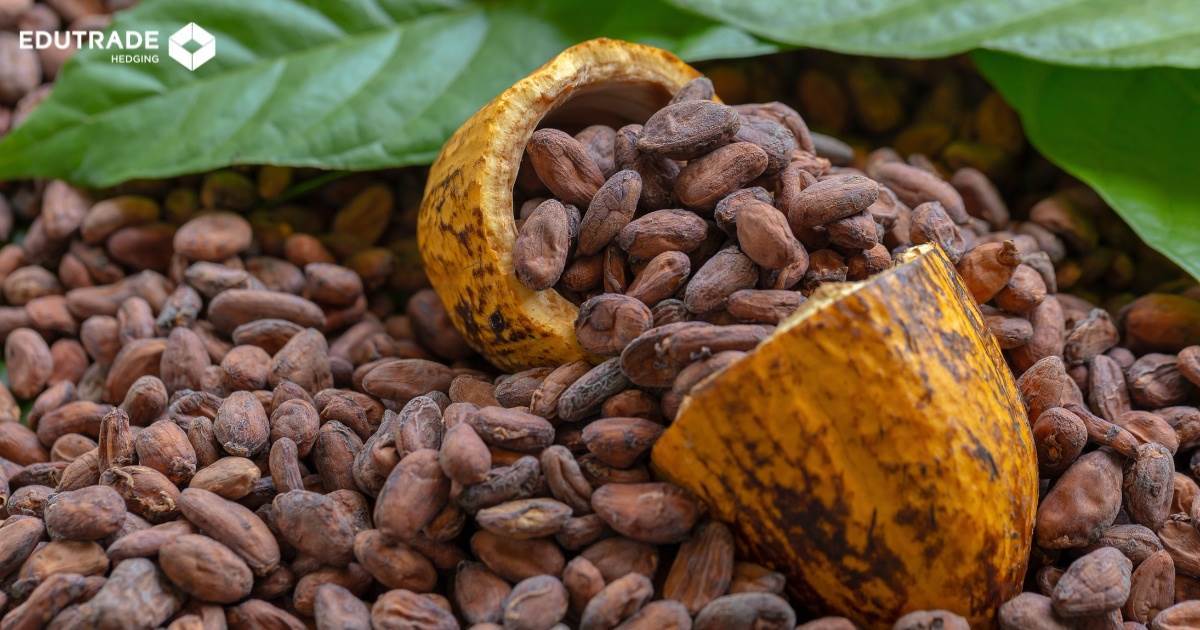
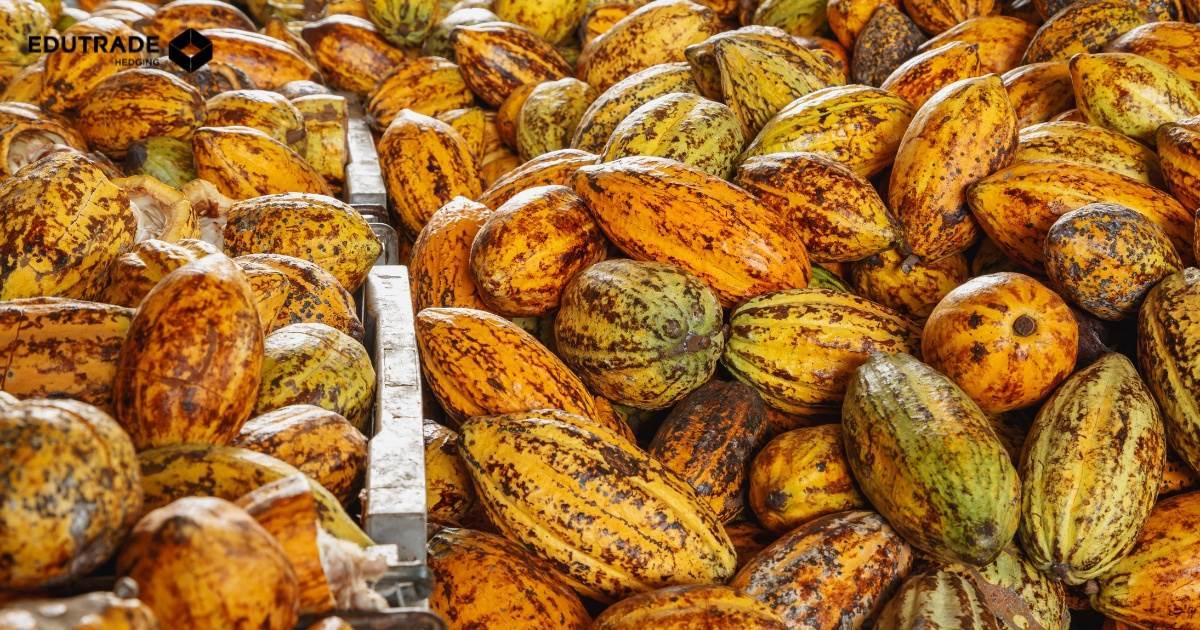
Cocoa, with the Latin name Theobroma cacao, literally means “Food of the Gods.” The cocoa tree originates from Central America and Mexico, where it was first discovered by the indigenous Aztec and Maya civilizations. Today, however, cocoa can be cultivated in most tropical regions worldwide. This crop also played a significant role in many ancient Central American cultures
Cocoa is a well-known and highly profitable agricultural commodity, with annual global consumption estimated at approximately 4.5–5 million metric tons in bean equivalent form “according to cbi.eu, 26/03/2025”.
Cocoa is a key commodity in the global market. Cocoa beans have been used for centuries in various applications and continue to enjoy strong market demand.
Leading Producing Countries
Updated production data indicate the following:
| Country | Estimated Production (2024) | Global Share |
| Côte d’Ivoire | ~2,000,000 tons | 40 % |
| Ghana | ~850,000 tons | 17 % |
| Indonesia | ~650,000 tons | 13 % |
| Ecuador | ~330,000 tons | 7 % |
| Nigeria & Cameroon | ~275–280,000 tons each | 5–6 % |
| Brazil | ~270,000 tons | 5 % |
“According to Radad International 2024
Côte d’Ivoire and Ghana rank first globally, together accounting for approximately 60%+ of total global cocoa production, while West Africa as a whole produces more than 70% of the world’s cocoa beans (“according to cbi.eu, 26/03/2025”).
Cocoa is also widely known as the key raw material used to produce one of the world’s most popular products: chocolate. Europe is the largest chocolate production and export market globally. With diverse demand from the cocoa and chocolate industries, European consumers are constantly seeking cocoa supplies of varying quality and origin. This diversity continues to drive strong growth in the European cocoa market. In addition, cocoa-based coatings are increasingly used in the processing of vegetables, fruits, and cereals to enhance product flavor.
Some of the world’s most well-known chocolate manufacturers include Nestlé (Switzerland), Hershey, and Mars (USA).
2. Characteristics
Cocoa is a mid-canopy evergreen tree with a small woody trunk, typically reaching a height of 4–8 meters and up to 10–20 meters under natural conditions. The tree thrives in shaded environments and has strong shade tolerance, allowing for intercropping practices that optimize land use.
3. Uses of Cocoa
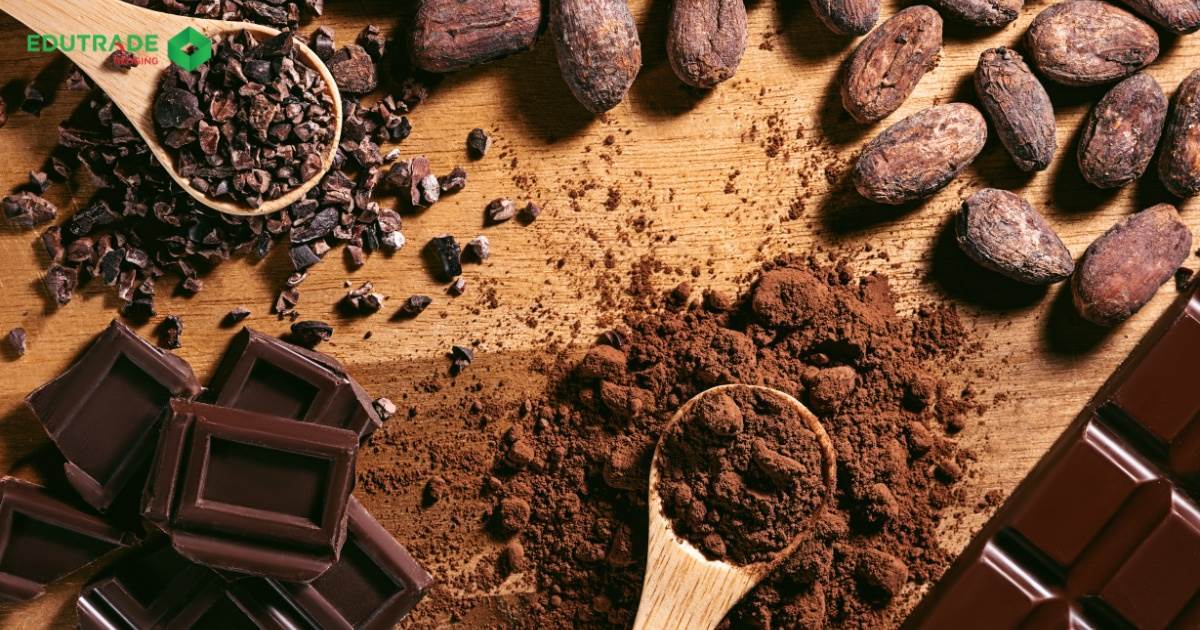
Below are some common uses of cocoa:
Milk and confectionery:
Confectionery and dairy products account for the majority of cocoa usage.
In particular, chocolate is the most famous cocoa-based product worldwide.
 Moisturizing creams and soap:
In liquid form, cocoa is refined into moisturizing creams due to its skin-firming and anti-aging properties.
Animal feed:
Cocoa bean shells, after separation, can be used as livestock feed.
Fertilizer:
Most cocoa husks are utilized as fertilizer due to their moisture-retention properties.
4. Cultivation and Harvesting
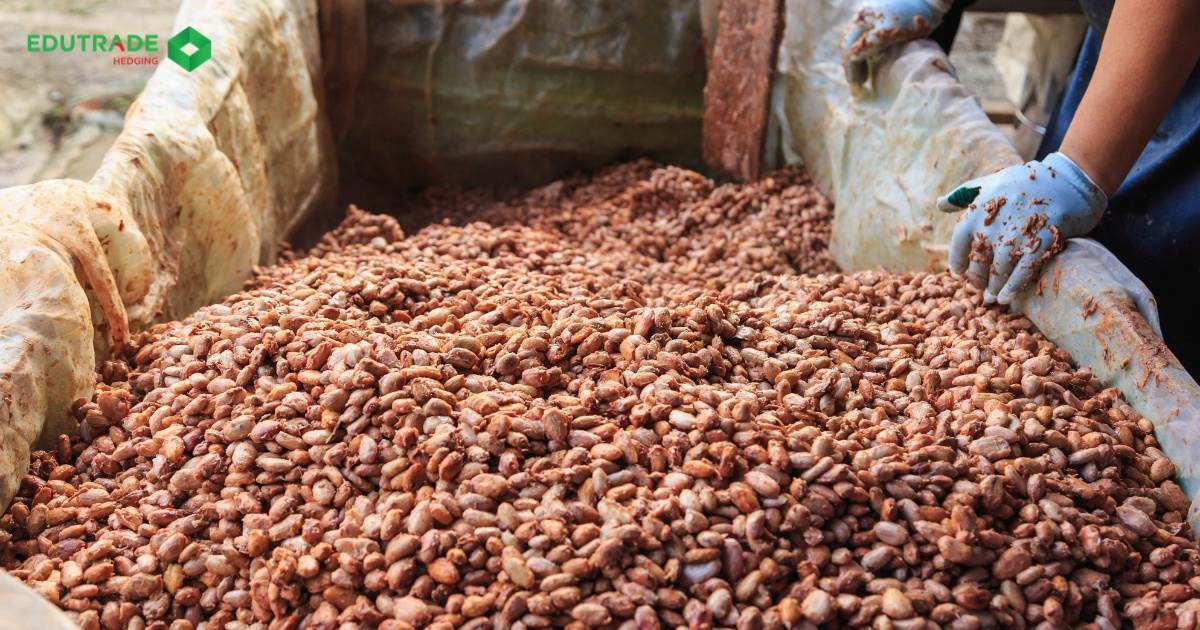
In most regions, particularly in Côte d’Ivoire and Ghana—where global production is highest—cocoa planting typically takes place in March and April. During this period, cocoa trees are in the pollination stage. After approximately five months, cocoa pods develop, and once fully mature, the main harvest season runs from August through February.
5. Cocoa Production and Export Situation (Latest Update)
Africa remains the world’s largest cocoa-producing region, accounting for the majority of global cocoa bean output. In particular:
- Côte d’Ivoire continues to lead global production, with approximately 2.3–2.4 million tons, representing over 40% of total global cocoa output.
- Ghana ranks second, with production exceeding 650,000 tons.
- Indonesia, Ecuador, Brazil, Cameroon, and Nigeria are also major producers, each supplying several hundred thousand tons annually. South American countries such as Ecuador are rapidly expanding production and are expected to potentially surpass Ghana by the mid-2020s.
Together, these countries account for more than 70–75% of global cocoa production, with Africa serving as the primary driving force of the industry.
In terms of raw cocoa bean exports, Côte d’Ivoire and Ghana remain the world’s two largest exporters, followed by countries such as Cameroon, Peru, Ecuador, and Colombia when measured by export value. African countries dominate raw cocoa exports, while value-added cocoa products (chocolate, cocoa butter, etc.) are primarily produced by industrialized nations.
6. Cocoa Import Situation
The cocoa import market remains heavily concentrated in Europe and North America:
- The Netherlands is one of the world’s largest cocoa bean importers. The Port of Amsterdam serves as the world’s largest cocoa trading and re-export hub, with approximately 881,000 tons imported in 2023.
- Belgium, Germany, Spain, and France are other major European importers supplying their processing and chocolate manufacturing industries.
- The United States and Malaysia are also among the key importing countries.
Data from 2023–2024 show that the EU accounts for approximately 60% of global cocoa imports, most of which are processed locally into higher-value products.
7. Export Situation
On the export side, Côte d’Ivoire remains the world’s largest cocoa bean exporter by volume, followed by other major producers such as:
- Ghana, which exports large volumes but experiences production volatility due to seasonal and agricultural conditions.
- Ecuador, along with Cameroon, Peru, and Colombia, which also contribute significantly to the raw cocoa export market.
Notably, the export value of raw cocoa beans does not fully reflect the strength of the cocoa value chain. Many importing countries (such as Germany, the Netherlands, and Belgium) specialize in deep processing and re-export of finished or semi-finished products, resulting in significantly higher trade value relative to raw material volumes.
8. Factors Affecting Cocoa Prices
8.1 Cocoa Supply and Demand
Global cocoa production increased significantly over the 30 years following 1985. However, over the past five years, production levels have stabilized without sharp growth.
Global cocoa output is subject to volatility and may decline in certain seasons due to production instability, disease, or climate-related factors.
Grinding demand (a proxy for demand) has increased in Europe and emerging markets, though it may fall below supply levels at certain times.
 8.2 Weather Factors
The Vegetation Health Index (VHI) is a composite indicator of temperature and soil moisture conditions. Values below 40 indicate severe water and heat stress, while values above 60 suggest favorable growing conditions.
In terms of rainfall, levels below 90 mm indicate below-average precipitation for the period, whereas values above 110 mm reflect above-average rainfall.
Since cocoa is cultivated across most regions of Côte d’Ivoire, prolonged adverse weather conditions can negatively impact national cocoa supply. Specifically, the Daloa region—accounting for a significant share of national output—has a strong influence on overall cocoa supply conditions.
8.3 Political Factors
Political issues significantly affect cocoa supply, particularly due to concerns over child labor within the industry. Children are often forced to work under harsh conditions, exposed to hazardous chemicals without protective equipment, and required to use dangerous harvesting tools.
As a result, policies related to child protection directly influence cocoa supply. This depends on whether child labor is replaced by adult workers to increase productivity, or whether stricter penalties are imposed for the use of child labor under the age of 16 in cocoa-growing regions.
Images and reports from international child protection organizations condemn the fact that over 2 million children are engaged in hazardous work in cocoa-growing areas of Côte d’Ivoire and Ghana, including heavy lifting, chemical exposure, and the use of sharp tools.
Changes in trade policies (tariffs, quotas) also affect exports and prices.
8.4 Complex Production Cycle
The cocoa production process—from planting to harvesting—requires sustained effort over many years. Farmers must make planting decisions long before realizing returns on their investment. Expectations of future prices play a significant role in production decisions. However, due to the long growth cycle, cocoa supply cannot respond quickly to changes in demand, potentially leading to shortages and sharp price increases. This complexity is further compounded by the perishable nature of cocoa, which cannot be stored indefinitely.
8.5 Infrastructure and Transportation
Cocoa is primarily grown in some of the world’s poorest regions, where infrastructure is limited. Poor road conditions and transportation equipment make supply chains vulnerable to disruption
For example, excessive rainfall can significantly delay cocoa transportation to end consumers, potentially causing supply shortages and higher prices.
8.6 Consumer Preferences for Cocoa-Based Products
Shifts in consumer preferences can influence cocoa demand and prices. In Western countries, dark chocolate consumption is increasing due to perceived health benefits. Dark chocolate production requires higher cocoa content than milk chocolate. Rising consumer demand in emerging markets may also drive cocoa prices higher. As chocolate is a discretionary product, demand is often linked to consumer wealth levels. Within the broader commodities sector, cocoa is considered one of the leading agricultural products traded on derivatives markets, with prices historically remaining high and relatively stable over long periods.
8.7 Inflation and British Pound Depreciation
Cocoa is one of the few commodities still traded in British pounds. When the pound depreciates, cocoa prices on the London futures market tend to rise. In contrast, U.S. cocoa futures are denominated in U.S. dollars and are therefore influenced by fluctuations in the U.S. currency.
9. Speculative Trends
Like many agricultural commodities, cocoa prices are influenced by both fundamental economic factors and speculative activity in futures markets.
During 2024–2025, cocoa prices experienced sharp rallies and deep corrections, reflecting a combination of tight supply, speculative expectations, and demand data.
Hedge fund positioning and futures markets:
- Managed money positions (hedge funds and non-commercial investors) in cocoa futures declined sharply from late-2024 peaks to mid-2025, with net long positions falling by up to 80% from prior highs. This indicates weakened expectations for continued price increases, driven by improved supply news and declining grinding demand (“according to foodnavigator.com, 26/09/2025”).
- With lower liquidity and declining open interest, the cocoa market became more volatile, with prices reacting more strongly to economic and agricultural data “according to reuters.com, 05/03/2025”
Impact of fundamental data:
- Reports on cocoa grindings—a key indicator of real demand from processors—showed year-on-year declines in Europe and Asia, leading to reductions in net long positions.
- Speculative activity tends to respond quickly to grinding data: sharp declines often prompt funds to rapidly cut long positions, adding downward price pressure.
Short-term effects:
- During sharp price movements, part of the momentum is driven by speculative capital flows and future supply-demand expectations rather than physical supply-demand conditions alone.
- For example, in mid-2025, when data indicated falling inventories and tighter supply, some funds returned to the market, pushing prices slightly higher before subsequent corrections aligned with real demand data.
In summary: In the current period, speculative trends and net investment positions are less dominant than before. The cocoa market is increasingly influenced by a mix of real demand conditions, expectations for supply-demand dynamics in the upcoming crop year, and reactions from financial investors.
 10. Cocoa-Related Reports
Cocoa grinding reports remain central to assessing real demand from the processing industry:
Grindings as a leading indicator:
- Cocoa grinding data for major regions such as Europe, North America, and Asia are typically released quarterly and reflect raw material purchasing behavior by processors.
- In 2025, data showed declines in Europe (-7.2%) and Asia (-16%), while North America recorded a slight increase. These figures directly influenced expectations for cocoa raw material demand.
Direct impact on prices:
- Grinding data below expectations are generally interpreted as weak demand fundamentals, often triggering sharp reductions in net long positions and downward price pressure.
- Conversely, stronger-than-expected grinding data tend to support prices in the short term.
Comparison with other commodities:
- In recent years, cocoa prices have shown low correlation with commodities such as corn, soybeans, or sugar, indicating that cocoa is driven by its own supply-demand fundamentals and end-product demand (chocolate), rather than broader agricultural trends (consistent with commodity market studies).
- While currency movements and economic conditions in major consuming markets (such as the British pound and U.S. dollar) affect futures pricing, grinding data and core supply-demand dynamics generally exert a stronger influence over the medium to long term
11. Key Strategies for Effective COCOA (ICE US) Investment
In-Depth Understanding of the Product and Trading Specifications
- Develop a comprehensive understanding of cocoa as a global agricultural commodity, including its physical characteristics, quality classifications, end-use applications (chocolate, cocoa butter, cocoa powder), and its role in the global food and confectionery supply chain.
- Fully understand the specifications of Cocoa futures contracts (CC) traded on ICE US, including contract size, pricing unit, minimum tick size, delivery months, delivery locations, and trading hours.
- Closely monitor key cocoa market indicators, such as:
- Open Interest and managed money positioning,
- Certified cocoa inventories at ICE warehouses,
- Cocoa grindings data in major regions (Europe, North America, Asia),
- Futures forward curve structure (contango/backwardation),
- Currency movements (USD and GBP).
→ These indicators help investors evaluate supply-demand balance and identify short- to medium-term cocoa price trends.
Utilizing Hedging and Risk Management Instruments
Cocoa futures play a critical role for:
- Cocoa processors and chocolate manufacturers: Locking in raw material costs to protect profit margins against price volatility.
- Exporters and traders: Managing price risks associated with fluctuating physical cocoa prices and shipment timing.
- Hedge funds and financial investors: Capitalizing on cocoa price volatility while diversifying and managing risk within commodity portfolios.
Staying Informed on Factors Influencing Cocoa Prices
- Cocoa prices are highly sensitive to:
- Weather conditions in major producing regions, especially West Africa (Côte d’Ivoire and Ghana),
- Crop diseases and production disruptions,
- Political and regulatory developments, including sustainability and child labor policies,
- Currency fluctuations, particularly USD and GBP,
- Global chocolate consumption trends and economic conditions in key consuming markets.
- Investors should closely track:
- Quarterly cocoa grindings reports,
- ICE-certified stock levels,
- Weather indicators (rainfall, VHI, El Niño/La Niña developments),
- Export data and government policy announcements from major producing countries.
→ Continuous monitoring enables more accurate assessment of cocoa market fundamentals and price direction.
Consulting Commodity Market Experts
- Edu Trade is a reputable organization and a leading member of the Vietnam Mercantile Exchange (MXV), specializing in consultancy and training for commodity derivatives investment.
- With over 10 years of practical market experience, Edu Trade’s expert team continuously tracks global commodity markets, delivering timely, objective, and data-driven insights to investors.
- Edu Trade regularly organizes professional training programs on commodity derivatives, supporting investors in:
- Developing effective trading strategies,
- Managing risks proactively,
- Avoiding common and preventable investment mistakes.
Edu Trade hopes the above insights provide investors with a clearer and more practical understanding of COCOA (ICE US).
If you are interested in trading cocoa futures or participating in the commodity derivatives market, please contact our Hotline: 0866.212.677 for professional consultation and dedicated support.

Nhận Định 08.04.2025 | Nhóm Nguyên Liệu
#edutrade #giaodichhanghoa #dautuhanghoa Công ty cổ phần EDUTRADE tự hào là đơn vị tư…

Nhận Định 07.04.2025 | Nhóm Nguyên Liệu
#edutrade #giaodichhanghoa #dautuhanghoa Công ty cổ phần EDUTRADE tự hào là đơn vị tư…

Nhận Định 04.04.2025 | Nhóm Nguyên Liệu
#edutrade #giaodichhanghoa #dautuhanghoa Công ty cổ phần EDUTRADE tự hào là đơn vị tư…

Nhận Định 03.04.2025 | Nhóm Nguyên Liệu
#edutrade #giaodichhanghoa #dautuhanghoa Công ty cổ phần EDUTRADE tự hào là đơn vị tư…

Nhận Định 02.04.2025 | Nhóm Nguyên Liệu
#edutrade #giaodichhanghoa #dautuhanghoa Công ty cổ phần EDUTRADE tự hào là đơn vị tư…

Nhận Định 01.04.2025 | Nhóm Nguyên Liệu
#edutrade #giaodichhanghoa #dautuhanghoa Công ty cổ phần EDUTRADE tự hào là đơn vị tư…

Nhận Định 31.03.2025 | Nhóm Nguyên Liệu
#edutrade #giaodichhanghoa #dautuhanghoa Công ty cổ phần EDUTRADE tự hào là đơn vị tư…

Nhận Định 27.03.2025 | Nhóm Nguyên Liệu
#edutrade #giaodichhanghoa #dautuhanghoa Công ty cổ phần EDUTRADE tự hào là đơn vị tư…

Nhận Định 25.03.2025 | Nhóm Nguyên Liệu
#edutrade #giaodichhanghoa #dautuhanghoa Công ty cổ phần EDUTRADE tự hào là đơn vị tư…

Nhận Định 24.03.2025 | Nhóm Nguyên Liệu
#edutrade #giaodichhanghoa #dautuhanghoa Công ty cổ phần EDUTRADE tự hào là đơn vị tư…