


 Facebbook
 Tiktok
 Youtube
 Zalo
Zalo Linkedin
 Investment community
 Instagram
|
TSR20 SICOM Rubber |
|
| Size | Full |
| Exchange | Singapore Exchange ( SGX ) |
| Commodity code | ZFT |
| Contract lot value (market price) | Commodity price * contract size |
| Contract size | 5 tons |
| Margin (changes according to MXV) | 10% of contract lot value |
| Trading price step | $0.1 ~ $5/lot |
| Quoted unit | Cent/kg |
| Profit/loss fluctuation $1/lot | $50 |
| Trading period | 12 months |
| Trading schedule | Monday – Friday |
| Trading session (winter opens 60 minutes late) | 06:55 – 17:00 |
| Price range | 10% of settlement price |
| Quality standard | According to the TSR20 rubber product standard traded on the Singapore Exchange |
| Delivery Registration Date | 05 working days before the first working day of the expiration month. |
| First notice day | According to MXV regulations |
| Last trading day | Last working day of the month immediately preceding the expiration month |
| Payment method | Physical delivery |
I. Overview of Rubber
1. Introduction
Natural rubber was first discovered and used in the 16th century in South America and later spread to various regions. However, its widespread industrial use truly flourished after the vulcanization process was perfected by Charles Goodyear between 1839 and 1844.
Rubber is a key industrial material, derived from a liquid plant product known as latex.
It is widely used in daily life—from tires to rubber gloves. As such, rubber is an important commodity, playing a central role in the global economy.

2. Applications
Natural rubber is a primary component in automotive and aircraft tires.
It is used in multiple car parts, including brake pads, gaskets, hoses, and seals for windows, doors, and windshields. Rubber is also used in airbag production.
Rubber is commonly used in flooring for gyms, commercial kitchens, and playgrounds.
Due to its elasticity, natural rubber is applied in swimwear, cycling shorts, and other stretchable garments.
Rubber is used to manufacture various everyday products, such as gloves, adhesives, mechanical gaskets, and flotation devices.
3. Production
Natural rubber thrives in humid tropical regions, particularly in Southeast Asian countries such as Thailand, Indonesia, Malaysia, Vietnam, Cambodia, and Myanmar, due to their favorable climate.
Natural rubber is a milky liquid called latex. Latex is extracted from rubber tree vessels and classified as raw latex, scrap, soil lumps, or coagulated lumps. The rubber content in latex is approximately 30–40%.
Rubber products are generally produced in two types: sheet rubber and block rubber (also known as Technically Specified Rubber – TSR). Block rubber is produced by cleaning, pressing, and drying the latex into solid blocks.
Sheet rubber can be classified into:
+ Air-dried sheets (ADS)
+ Ribbed smoked sheets (RSS)
(RSS is the type commonly traded on TOCOM.)
The primary difference between ADS and RSS lies in the drying method. ADS is air-dried, while RSS is processed using naphtha and smoke in smokehouses at temperatures up to 60°C to produce rubber sheets.
With favorable natural conditions, the leading rubber-producing countries are:
- Thailand: Approximately 4.7–5.0 million tons – the largest producer in the world.
- Indonesia: Approximately 2.7 million tons.
- Côte d’Ivoire: Approximately 1.4 million tons.
These three countries account for roughly 60% of global production. To meet economic development needs, consumption levels are as follows:
- Global natural rubber production in 2024 is estimated at 11.2–14.9 million tons.
- Due to rising demand, the natural rubber market is projected to grow long-term, with global profits expected to reach USD 26.7 billion by 2035.
II. Analysis of Factors Affecting Rubber Prices
1. Geopolitical Factors
Since natural rubber production is concentrated in certain regions, changes in weather or political conditions in these areas significantly impact production levels.
Historically, unexpected climate events have caused production drops and sharp price increases.
Additionally, demand depends on the quantity of rubber sold, which is closely linked to global and regional economic trends.
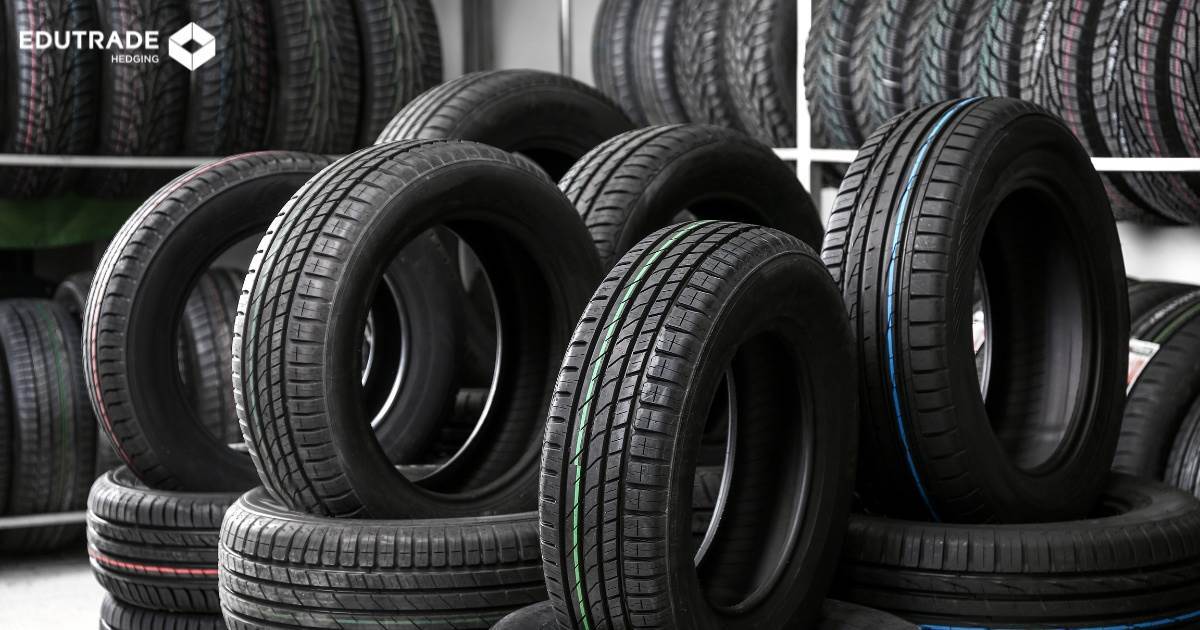
For example, the highest natural rubber consumption is in automobile tires. Rising car demand—not only in developing countries like China, India, and Thailand but also in densely populated nations—serves as a key driver for increasing rubber prices.
2. Supply and Demand
As a commodity, rubber prices are heavily influenced by supply and demand dynamics.
Reported data on inventory shortages or surpluses strongly impact market prices.
Moreover, rubber trees have a long growth cycle. Newly planted trees require 5–7 years to mature before latex can be harvested
Creating potential risks of supply-demand imbalances in the market.
3. Correlation with Transportation
Rubber prices often correlate with oil prices. When oil prices rise, rubber prices tend to increase, and vice versa.
This is because synthetic rubber is made from naphtha (a petroleum derivative), and oil also serves as fuel for transporting goods, including rubber.
Therefore, rising crude oil and petroleum product prices, including naphtha, inevitably increase synthetic rubber costs.
4. Seasonal Variations
Natural rubber is produced year-round; however, in Thailand—the world’s largest producer—production declines during the dry season (winter leaf-shedding or reduced yield) from winter to February
Conversely, the rainy season, starting from mid-February, sees increased production. Variations between dry and rainy seasons can create supply-demand imbalances.
Investors should monitor weather conditions in major producing regions, especially unusual weather events.
5. Production Seasonality
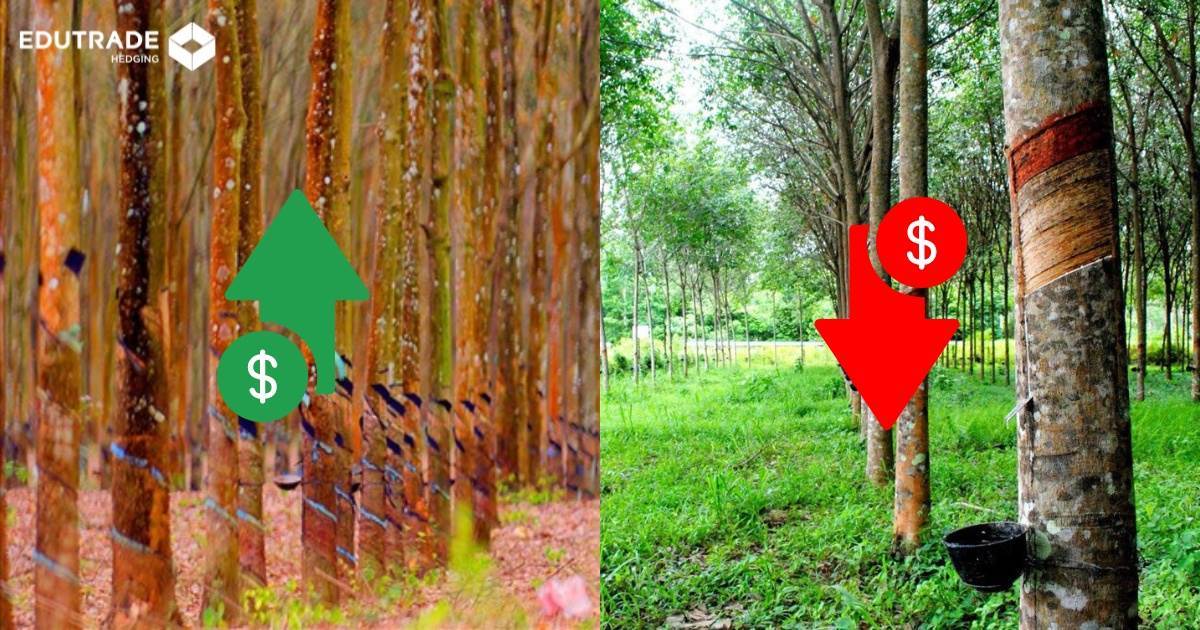
Rubber has distinct seasonal production patterns in Southeast Asia: the dry season usually lowers output, while the rainy season increases output. These fluctuations affect short-term supply and prices. Generally, prices rise during the dry season (winter to February) and decrease during the rainy season (from late February onward).
III. Rubber Trading Strategies
1. Based on Shanghai Rubber Inventory Data
China is one of the world’s largest rubber importers. Inventory data from China is used as an indicator of current demand. A reduction in stock—caused by rising consumption—supports prices, and vice versa.
Typically, Chinese laborers take year-end holidays, particularly during Lunar New Year, which, combined with heightened production demand, causes inventories to drop sharply in October, November, and December.
2. Based on Vehicle Production and Sales in China
As previously noted, automobile production and sales serve as a key indicator of rubber consumption. China is also the world’s largest automobile manufacturer, so production and sales reports from China influence rubber prices more than those from other countries. Generally, lower production and sales exert downward pressure on prices, and higher figures support upward price movement.
3. Key Strategies for Effective TSR20 Rubber Investment
In-Depth Understanding of the Product and Trading Specifications
Develop a thorough understanding of TSR20 rubber as a global industrial commodity, including its physical characteristics, quality classifications, main applications (tires, automotive parts, industrial products), and its role in the global manufacturing and automotive supply chain.
Fully understand the specifications of TSR20 Rubber futures contracts traded on major exchanges (e.g., TOCOM, Shanghai Futures Exchange), including contract size, pricing unit, minimum tick size, delivery months, delivery locations, and trading hours.
Closely monitor key rubber market indicators, such as:
- Open interest and managed money positioning,
- Certified rubber inventories at warehouses,
- Vehicle production and tire manufacturing data in major consuming countries (China, India, Thailand),
- Futures forward curve structure (contango/backwardation),
- Currency movements, particularly USD.
→ These indicators help investors evaluate supply-demand balance and identify short- to medium-term TSR20 price trends.
Utilizing Hedging and Risk Management Instruments
TSR20 rubber futures play a critical role for:
- Rubber processors and tire manufacturers: Locking in raw material costs to protect profit margins against price volatility.
- Exporters and traders: Managing price risks associated with fluctuating physical rubber prices and shipment timing.
- Hedge funds and financial investors: Capitalizing on TSR20 price volatility while diversifying and managing risk within commodity portfolios.
Staying Informed on Factors Influencing Rubber Prices
- TSR20 rubber prices are highly sensitive to:
- Weather conditions in major producing regions, especially Thailand, Indonesia, and Malaysia.
- Production disruptions, plant diseases, or labor issues.
- Geopolitical and regulatory developments.
- Currency movements, particularly USD.
- Global automotive production and tire demand trends.
- Investors should closely track:
- Quarterly rubber inventory and export reports,
- Weather indicators (rainfall, drought, extreme events),
- Vehicle production and tire manufacturing statistics in major markets,
- Policy announcements from key producing countries.
→ Continuous monitoring enables more accurate assessment of TSR20 market fundamentals and price direction.
Consulting Commodity Market Experts
- Edu Trade is a reputable organization and a leading member of the Vietnam Mercantile Exchange (MXV), specializing in consultancy and training for commodity derivatives investment.
- With over 10 years of practical market experience, Edu Trade’s expert team continuously tracks global commodity markets, delivering timely, objective, and data-driven insights to investors.
- Edu Trade regularly organizes professional training programs on commodity derivatives, supporting investors in:
- Develop effective trading strategies,
- Proactively manage risks,
- Avoiding common and preventable investment mistakes.
Edu Trade hopes the above insights provide investors with a clearer and more practical understanding of TSR20 Rubber.
For professional consultation and dedicated support, contact our Hotline: 0866.212.677.

Nhận Định 08.04.2025 | Nhóm Nguyên Liệu
#edutrade #giaodichhanghoa #dautuhanghoa Công ty cổ phần EDUTRADE tự hào là đơn vị tư…

Nhận Định 07.04.2025 | Nhóm Nguyên Liệu
#edutrade #giaodichhanghoa #dautuhanghoa Công ty cổ phần EDUTRADE tự hào là đơn vị tư…

Nhận Định 04.04.2025 | Nhóm Nguyên Liệu
#edutrade #giaodichhanghoa #dautuhanghoa Công ty cổ phần EDUTRADE tự hào là đơn vị tư…

Nhận Định 03.04.2025 | Nhóm Nguyên Liệu
#edutrade #giaodichhanghoa #dautuhanghoa Công ty cổ phần EDUTRADE tự hào là đơn vị tư…

Nhận Định 02.04.2025 | Nhóm Nguyên Liệu
#edutrade #giaodichhanghoa #dautuhanghoa Công ty cổ phần EDUTRADE tự hào là đơn vị tư…

Nhận Định 01.04.2025 | Nhóm Nguyên Liệu
#edutrade #giaodichhanghoa #dautuhanghoa Công ty cổ phần EDUTRADE tự hào là đơn vị tư…

Nhận Định 31.03.2025 | Nhóm Nguyên Liệu
#edutrade #giaodichhanghoa #dautuhanghoa Công ty cổ phần EDUTRADE tự hào là đơn vị tư…

Nhận Định 27.03.2025 | Nhóm Nguyên Liệu
#edutrade #giaodichhanghoa #dautuhanghoa Công ty cổ phần EDUTRADE tự hào là đơn vị tư…

Nhận Định 25.03.2025 | Nhóm Nguyên Liệu
#edutrade #giaodichhanghoa #dautuhanghoa Công ty cổ phần EDUTRADE tự hào là đơn vị tư…

Nhận Định 24.03.2025 | Nhóm Nguyên Liệu
#edutrade #giaodichhanghoa #dautuhanghoa Công ty cổ phần EDUTRADE tự hào là đơn vị tư…