



| CORN (ZCE – CBOT ) | |||
| Size | Full | Mini | Micro |
| Exchange | CBOT (Chicago Board of Trade ) | CBOT (Chicago Board of Trade ) | CBOT (Chicago Board of Trade ) |
| Commodity code | ZCE | XC | MZC |
| Contract lot value | Commodity price * contract size | Commodity price * contract size | Commodity price * contract size |
| Contract size | 5,000 bushels ~ 100 tons | 1,000 bushels ~ 20 tons | 500 bushels/lot ~ 10 tons |
| Margin (changes according to MXV) | 10% of contract lot value | 10% of contract lot value | 10% of contract lot value |
| Trading price step | 0.25 ~ $12.5/lot | 0.125 ~ $1.25/lot | 0.5~ $2.5/lot |
| Quoted unit | cents/bushel | cents/bushel | cents/bushel |
| Profit/loss fluctuation 1/lot | $50 | $10 | $5 |
| Trading month | 3;5;7;9;12 | 3;5;7;9;12 | 3;5;7;9;12 |
| Trading hours | Monday – Friday | Monday – Friday | Monday – Friday |
| Trading session
(winter opens 60 minutes late) |
07:00 – 19:45
20:30 – 01:20 (next day) |
07:00 – 19:45
20:30 – 01:20 (next day) |
07:00 – 19:45
20:30 – 01:20 (next day) |
| Price range | Initial price limit: $0.35/bushel
Expanded price limit: $0.55/bushel |
Initial price limit: $0.35/bushel
Expanded price limit: $0.55/bushel |
Initial price limit: $0.30/bushel
Expanded price limit: $0.45/bushel |
| Quality standard | Yellow corn grade 1, grade 2, grade 3 | Yellow corn grade 1, grade 2, grade 3 | Yellow corn grade 1, grade 2, grade 3 |
| Delivery Registration Date | 5th working day, before the
first notice |
5th working day, before the
first notice |
According to MXV regulations |
| First notice day | Last working day of
month immediately preceding the expiration month |
Last working day of
month immediately preceding the expiration month |
Last working day of
month immediately preceding the expiration month |
| Last trading day | Working day 15 days prior
of the expiration month |
Working day 15 days prior
of the expiration month |
6th working day, before the
first notice |
| Payment method | Physical delivery | Physical delivery | No physical delivery |
I. Introduction
1. Origin and Position in the Global Food System
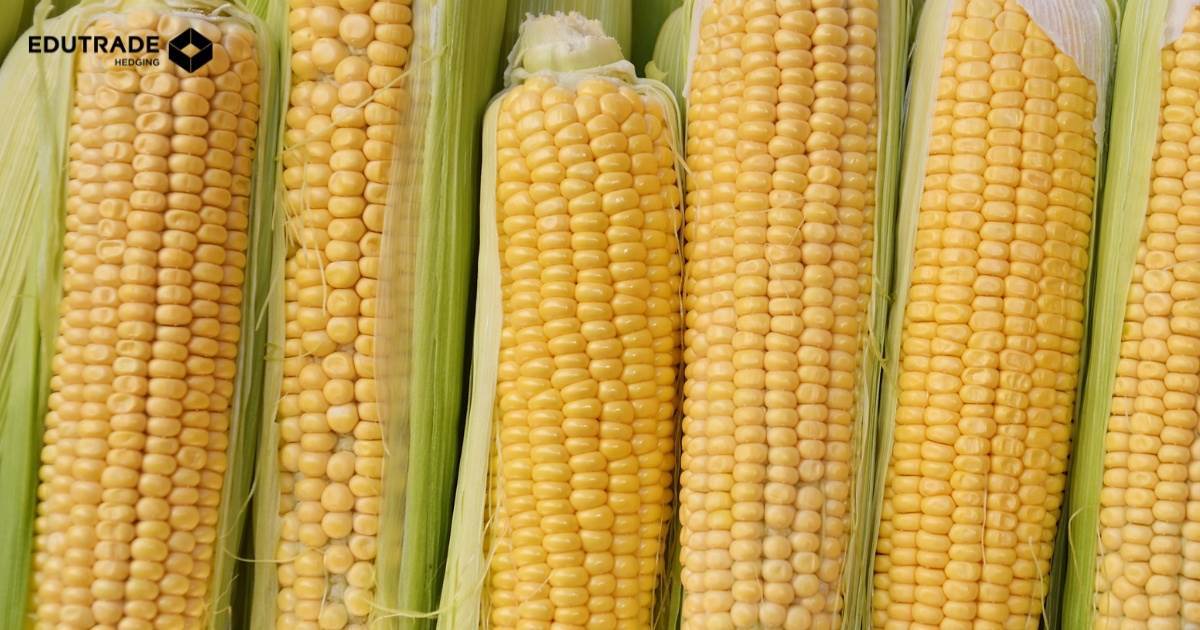
Corn (Zea mays L. ssp. mays) Zea mays L. ssp. maysa member of the Poaceae family, originates from Central America and was domesticated by humans thousands of years ago, becoming one of the world’s staple cereal crops. Corn currently holds the largest production volume among cereals, with global output for 2024 estimated at approximately 1.20–1.22 billion tons, and forecasts for the 2025/26 season exceeding 1.26 billion tons, surpassing the individual production of wheat and rice, and representing the majority of total global cereal production.
Corn is cultivated in over 170 countries and territories, with the largest production regions in North and South America, China, and the European Union. The United States remains the world’s largest corn producer, with an annual output of approximately 380–402 million tons, equivalent to 30–32% of total global production, followed by China, Brazil, Argentina, and EU countries such as France.
Biotechnology has shaped corn production in many regions, particularly in the U.S., where genetically modified (GMO) corn varieties account for 80–90% of planted acreage in 2024.
Corn plays a crucial role in both economic development and food security. Beyond direct human consumption, most corn production is used for animal feed, ethanol biofuel production, and industrial products, contributing significantly to global food and livestock supply chains.
2. Role and Applications
Role in Food-Energy Chain:
Role:
Corn is a strategically important crop in agriculture, industry, and the global food-energy chain. Worldwide, approximately 60–65% of corn is used for animal feed, forming the foundation for meat, egg, and dairy production; a smaller portion is used directly as human food; and 15–20% is applied in industrial processing, including food, chemicals, and biofuel (ethanol) production. Its versatility makes corn not only an essential food crop but also a strategic raw material connecting food security, renewable energy, and economic growth
Applications:
- Human Food: Corn and corn-based products are staple foods in many African, Latin American, and Asian countries, providing roughly 21% of global caloric intake, particularly important in rural areas.
- Animal Feed: Corn is the primary ingredient in livestock, poultry, and aquaculture diets, accounting for approximately 60–61% of global corn production, underpinning meat, egg, and dairy production.
- Industrial Raw Material: Corn is widely used to produce starch, glucose syrup, corn oil, confectionery, alcohol, and chemical products for the food, pharmaceutical, and processing industries
- Biofuel (Ethanol): Corn is the main feedstock for ethanol production. In the U.S., about 40% of domestic corn production is used for ethanol, highlighting its strategic role in energy security.
- Export Commodity: Corn is among the most actively traded agricultural commodities globally, generating significant foreign exchange revenue and maintaining strong international competitiveness.
- Fresh Food: Young corn is consumed as fresh food, rich in vitamins and minerals, popular in many regions.
- Strategic Importance: Due to its versatility and high economic value, corn is a strategic raw material, closely linking food security, energy, and global economic development.
II. Global and Vietnamese Corn Production, Export, and Import
1. Production and Stock Levels
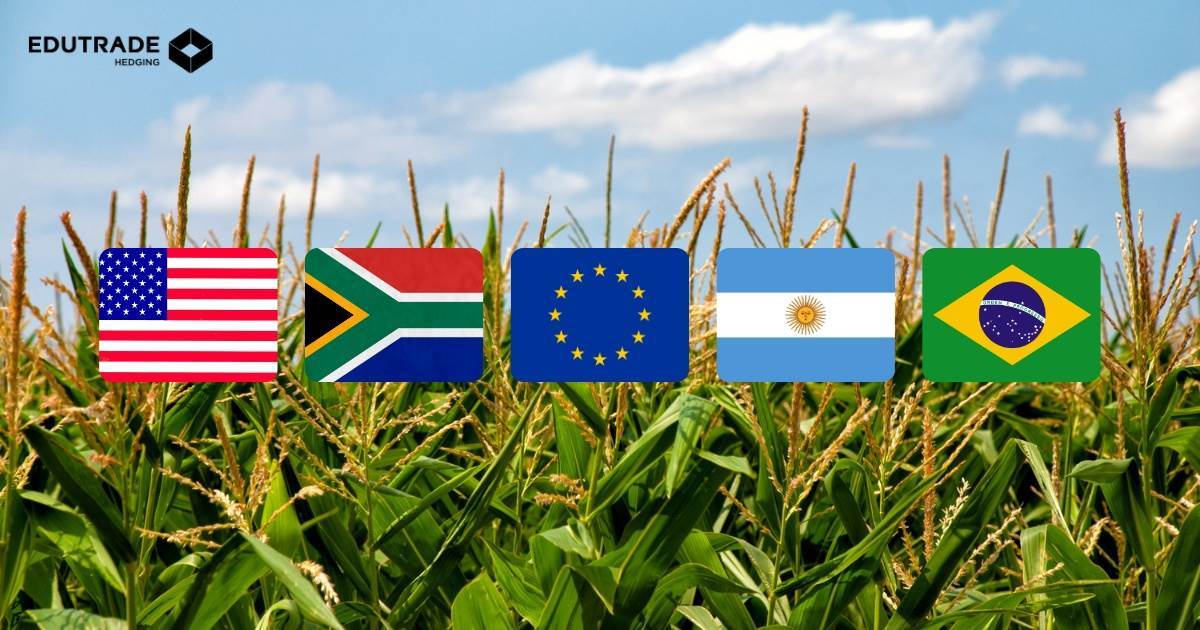
The United States, Brazil, and Argentina are the top three global corn exporters, playing a key role in shaping global supply, demand, and pricing. During 2024–2025, these three countries, along with Ukraine, account for approximately 82% of global corn exports, with the U.S. and Brazil each contributing 26–27%, and Argentina about 12%. Due to this concentration, harvest cycles, weather, and agricultural policies in these countries directly influence international corn prices. Global ending stocks are estimated at 287–290 million tons, serving as a market buffer but remaining sensitive to changes in production or exports from the U.S., Brazil, and Argentina.
2. Export
Global corn exports are concentrated in leading countries: the U.S., Brazil, Argentina, Ukraine, and the European Union. According to 2024 statistics: The U.S. leads with ~31.5% of global corn export value. Brazil accounts for ~18%, Argentina ~14.4%, and Ukraine ~11–12%. EU countries such as France, Romania, and South Africa contribute smaller shares but remain significant exporters.
The top 10 exporting countries account for over 90% of total international corn trade, indicating a highly concentrated market.
3. Import
Major global corn importers include Mexico, Japan, China, South Korea, Vietnam, and Egypt, reflecting high demand for animal feed, food production, and domestic consumption. In 2024: Mexico accounted for ~11.1% of global corn import value. Japan ~7.7%, China ~7.4%, South Korea ~5.6%, Vietnam ~4.9%, Egypt ~3.5%.
In Vietnam, corn remains a strategic import commodity due to high domestic livestock industry demand. During the first 6–8 months of 2025, Vietnam imported 4.4–4.7 million tons of corn, valued at USD 1.15–1.73 billion, primarily for animal feed and livestock production. Argentina supplied ~50–55% of Vietnam’s imports (~2.3–3.72 million tons, USD 611–947 million). Brazil accounted for ~22–22.6% (~1–1.48 million tons, USD 250–368 million). Other sources such as Laos, Thailand, and India contributed minor shares.
III. Factors Affecting Corn Prices
1. Global Supply and Demand: Demand is the primary driver of corn prices. Excess supply with low demand reduces prices; high demand with limited supply increases prices.
Projected global production for 2025–26: ~1.297 billion tons.
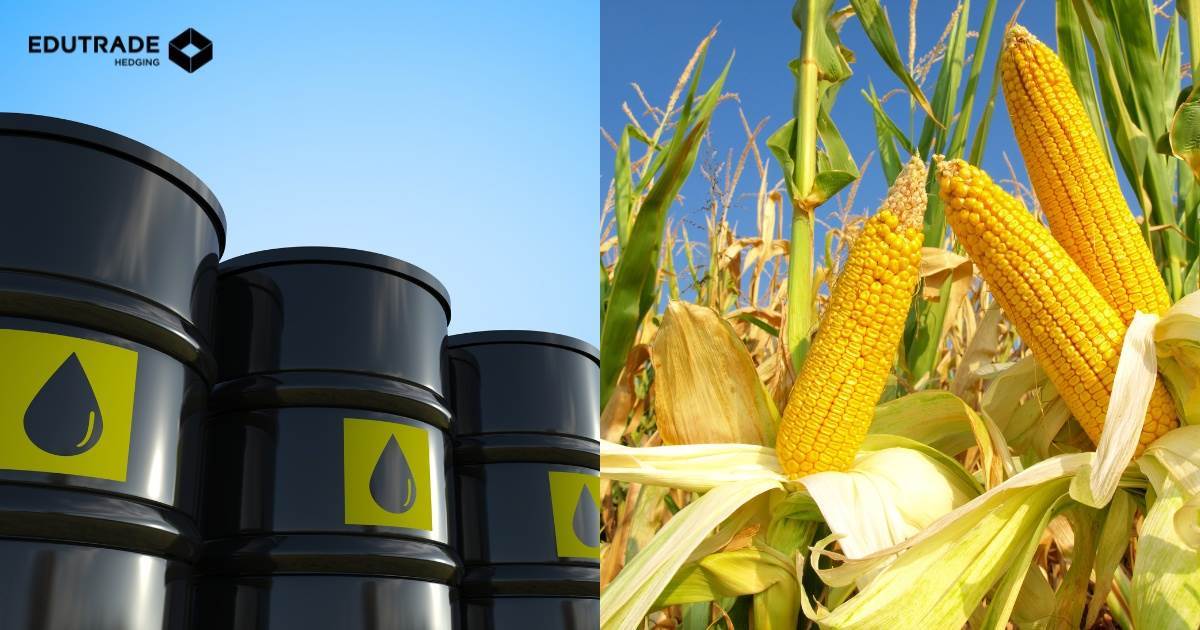
2. Ethanol Market: Biofuel demand and related policies significantly impact corn prices. Growth in ethanol demand in major economies (U.S., China, India) supports corn prices, while fuel market instability may have the opposite effect.
3. Crude Oil Prices: Higher oil prices make ethanol more attractive → increasing corn demand; lower oil prices have the reverse effect. 2025 price range: ~USD 60–80/barrel.
4. Impact of China: China, a major ethanol consumer and importer, significantly influences global corn demand.
5. Weather and Climate Change: Droughts, excessive rainfall, or La Niña/El Niño events affect precipitation, directly impacting yield and corn price volatility.
6. USD Exchange Rate Fluctuations: Corn is priced in USD. A stronger USD makes corn more expensive for foreign buyers → reducing import demand and potentially lowering prices, and vice versa.
7. Competition from Alternative Crops: Soybeans compete for planting area and usage, affecting corn supply and prices.
8. Logistics and Supply Chain Costs: Transportation, storage, import/export tariffs, and regional production quality influence corn prices.
IV. Corn Trading Standards on CBOT (CME Group)
Corn traded on the Chicago Board of Trade (CBOT) must meet the following quality standards:
- Grade 1: Minimum test weight 56 lbs; maximum moisture 14%; maximum damaged and foreign kernels 2.00%; maximum total defective kernels 3.00%; heat-damaged kernels 0.10%.
- Grade 2: Minimum test weight 54 lbs; maximum moisture 15.50%; maximum damaged and foreign kernels 3.00%; maximum total defective kernels 5.00%; heat-damaged kernels 0.20%.
- Grade 3: Minimum test weight 52 lbs; maximum moisture 17.50%; maximum damaged and foreign kernels 4.00%; maximum total defective kernels 7.00%; heat-damaged kernels 0.50%.
V. Effective Corn Investment Strategies (CBOT – CME Group)
In-depth product knowledge:
- Familiarize yourself with CBOT corn characteristics: trading grades, quality standards, production process, crop cycles, and storage conditions.
- Understand corn applications: livestock feed, human consumption, industrial use, and ethanol production.
Market Analysis:
- Study global supply and demand, price trends, production, stocks, trade policies, and influencing factors such as oil prices, ethanol markets, and weather conditions.
Monitor Price Movements & Market Data:
- Continuously monitor CBOT/CME corn prices, production reports, stock levels, trade policies, currency fluctuations, and competition from alternative crops.
Technical & Fundamental Analysis:
- Use technical analysis tools to identify trends, support, and resistance levels.
- Combine with fundamental analysis, including production forecasts, weather conditions, logistics costs, inventory levels, and tariff policies, to make informed investment decisions.
Expert Consultation & Knowledge Development:
- Seek advice from experienced commodity experts to address questions and receive tailored investment strategies.
- Participate in advanced commodity investment courses to enhance market analysis skills and decision-making capabilities.
Investing in CBOT corn offers high profit potential but requires careful risk management. Contact Edu Trade at Hotline: 0866 212 677 for professional consultation. Edu Trade – A reputable member of the Vietnam Commodity Exchange.
Theo quy định của sản phẩm Ngô CBOT giao dịch trên Sở Giao dịch Hàng hóa CBOT.
Ngô được chấp nhận giao dịch là ngô loại 1, ngô loại 2, ngô loại 3 đáp ứng những tiêu chuẩn được mô tả ở bảng dưới:
| Phân loại | Trọng lượng thử nghiệm tối thiểu trong 1 giạ | Độ ẩm tối đa | Tỷ lệ tối đa số hạt vỡ và hạt ngoại lai | Số hạt hư tối đa | Hạt hư do nhiệt |
| Loại 1 | 56 pound | 14% | 2.00% | 3.00% | 0.10% |
| Loại 2 | 54 pound | 15.50% | 3.00% | 5.00% | 0.20% |
| Loại 3 | 52 pound | 17.50% | 4.00% | 7.00% | 0.50% |
Đang cập nhật...
Đang cập nhật...
Đang cập nhật...