


 Facebbook
 Tiktok
 Youtube
 Zalo
Zalo Linkedin
 Cộng đồng đầu tư
 Instagram
Crude oil prices fell to a three-month low as traders responded to easing fears over the Strait of Hormuz, one of the world’s most important energy chokepoints. The move reflected a broader shift in market sentiment, as investors weighed the possibility that regional tensions may not escalate enough to disrupt shipping lanes or global supply. For oil markets, where geopolitical risk can trigger sharp price swings, even a modest improvement in expectations can quickly put pressure on prices. For context on earlier market reactions, see recent oil price gains during Middle East conflict.
The decline highlighted how closely crude benchmarks remain tied to events in the Middle East. The Strait of Hormuz is a narrow passage between the Persian Gulf and the Gulf of Oman, and it is vital to the movement of crude oil and liquefied natural gas from major exporters such as Saudi Arabia, Iraq, the United Arab Emirates, and Iran. Any threat to traffic through the strait can raise concerns about supply disruption, insurance costs, and shipping delays. When those fears ease, prices often retreat just as quickly. A recent analysis from UkrAgroConsult on the Strait of Hormuz and crude prices also noted how expectations around the waterway can move the market.
Why the Strait of Hormuz matters so much
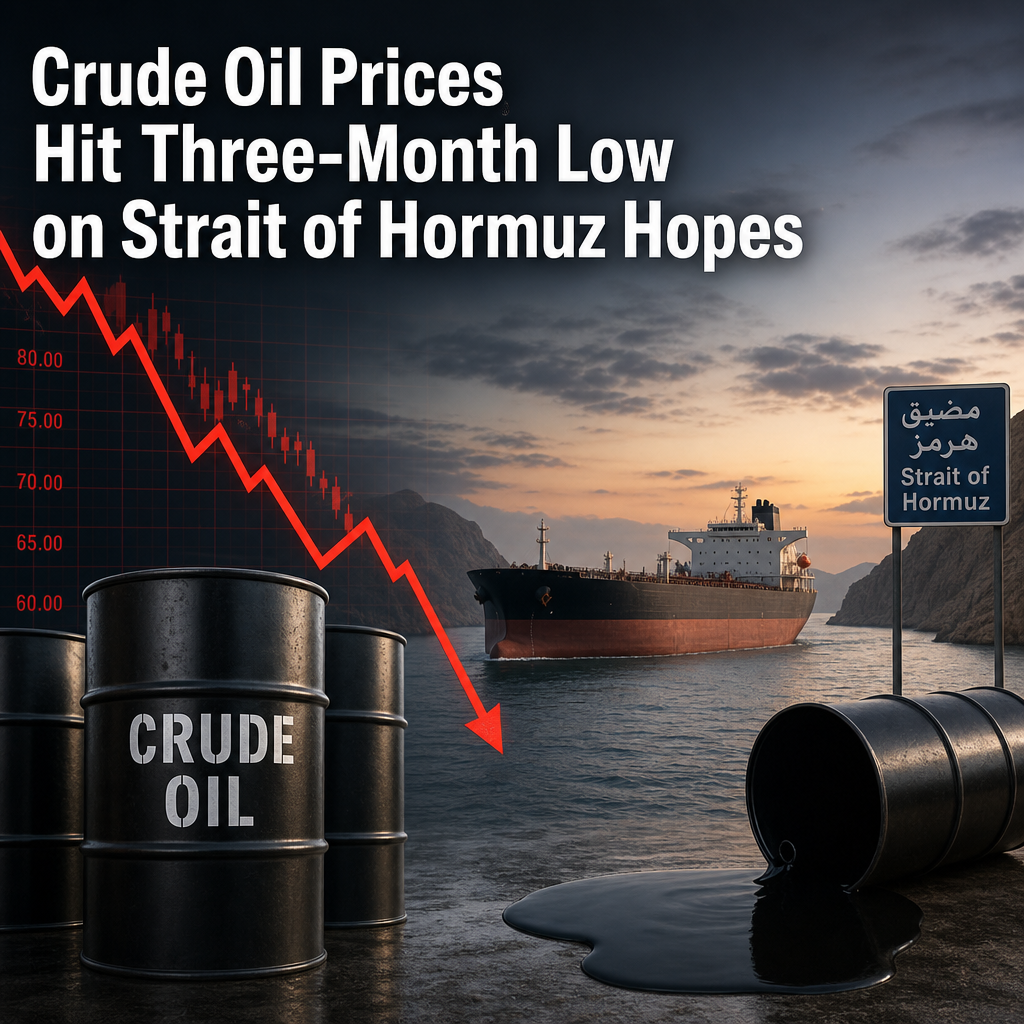
The Strait of Hormuz is one of the most strategically important waterways in the world. Roughly one-fifth of global oil consumption passes through it each day, making it a critical route for international energy trade. Because there are few practical alternatives for moving such large volumes, the market treats any tension in the region as a major risk factor.
If ships cannot move freely through the strait, even briefly, the consequences can ripple across the global economy. Oil producers may face export bottlenecks, refiners may struggle to secure feedstock, and consumers may see higher fuel costs. Traders also tend to react immediately to headlines involving military activity, sanctions, maritime incidents, or diplomatic breakdowns that could affect the region.
That sensitivity explains why crude prices can rise or fall on expectations before any actual disruption occurs. Markets often price in risk long before supply is physically affected. When those risks appear to fade, speculative positions are unwound and prices can slide rapidly.
What pushed crude oil prices lower
The recent drop in crude oil prices was driven largely by optimism that the Strait of Hormuz would remain open and operational despite regional tensions. As fears of immediate disruption diminished, the market no longer needed to maintain as much risk premium in prices. That risk premium is the extra amount traders are willing to pay when they believe supply may be threatened.
Several factors can contribute to such a move. Diplomatic signals may suggest restraint, military developments may fail to escalate, or shipping traffic may continue without interruption. In each case, the market interprets the news as a sign that the worst-case scenario is less likely.
At the same time, broader market fundamentals may have added downward pressure. Oil prices are not driven by geopolitics alone. Demand expectations, inventory data, interest rate trends, and production levels from major exporters all influence price direction. If economic growth appears softer or supply remains ample, the market can struggle to hold gains even when geopolitical risks are present.
How traders interpret the shift
For traders, a three-month low does not necessarily mean the market is turning bearish for the long term. Instead, it often reflects a temporary reassessment of risk. Futures markets are especially reactive to new information, and price movements can be amplified by speculative positioning and automated trading systems.
When tensions in a key shipping lane ease, investors who bought crude as a hedge against disruption may start selling. Other participants may reduce long positions after deciding that a supply shock is less likely. This selling can accelerate if technical support levels are broken, prompting additional momentum-driven trades.
The result is a price decline that may look dramatic in the short term, even if the fundamental outlook for supply and demand has not changed much. In many cases, such moves are less about oversupply and more about the removal of an earlier fear premium.
Impact on energy markets and consumers
Lower crude prices can have mixed effects across the energy sector. For consumers, the immediate result is often welcome. Cheaper crude can eventually lead to lower gasoline and diesel prices, although the pass-through is rarely immediate and depends on refining margins, taxes, and regional distribution costs.
For oil producers, however, lower prices can squeeze revenues and reduce cash flow. Companies with higher production costs are especially vulnerable when benchmark prices fall. National oil budgets in exporting countries may also come under pressure if lower prices persist.
Refiners and airlines may benefit from the decline if fuel costs stabilize or ease. Petrochemical producers and other energy-intensive industries can also gain from lower input prices. But the broader economic effect depends on why prices are falling. A drop caused by weaker global demand is usually more concerning than a decline driven by reduced geopolitical risk.
The role of geopolitics in price volatility
Crude oil remains one of the most geopolitically sensitive commodities in the world. Unlike many other markets, oil prices can move sharply on the basis of a single headline, statement, or incident. That is especially true when the headline concerns a chokepoint such as the Strait of Hormuz.
Markets are not only evaluating the current situation but also the probability of future developments. Will tensions escalate? Could there be retaliatory action? Are naval forces being deployed? Are tankers changing route? Each question can affect the market’s perception of risk.
This dynamic helps explain why oil often sees large intraday swings during periods of instability. Traders are constantly balancing two competing forces: the possibility of physical supply disruption and the likelihood that diplomacy or deterrence will prevent it. When confidence in safe passage rises, prices can fall quickly.
What to watch next
Even with crude at a three-month low, the outlook remains fluid. Oil markets will continue to monitor shipping activity, political statements, and any signs of heightened military risk near the Strait of Hormuz. A single incident involving tankers or naval vessels could quickly reverse the recent decline.
Investors will also be watching traditional market indicators such as U.S. crude inventories, OPEC+ supply policy, global demand forecasts, and economic data from major consumers like the United States, China, and Europe. If demand weakens further, that could reinforce the downward trend. If supply becomes tighter or tensions flare again, prices could rebound just as fast.
In the near term, the market is likely to remain highly reactive. The balance between geopolitical calm and underlying supply-demand fundamentals will determine whether crude stabilizes at these lower levels or resumes a broader move in either direction.
A reminder of how fragile oil sentiment can be
The latest slide in crude oil prices serves as a reminder that energy markets can turn on expectations as much as on physical flows. The Strait of Hormuz may not have been disrupted, but the fear that it might be was enough to influence pricing. Once those fears eased, the market quickly adjusted.
That response shows the central role of confidence in global oil trading. As long as critical shipping routes remain open and tensions remain contained, risk premiums can fade. But because the world depends so heavily on a narrow corridor for energy transport, the market will continue to react strongly to any hint of instability.
For now, the three-month low reflects a calmer view of one of the most volatile geopolitical flashpoints in the oil market. Whether that calm lasts will depend on events far beyond the trading floor.