


 Facebbook
 Tiktok
 Youtube
 Zalo
Zalo Linkedin
 Investment community
 Instagram
|
SILVER - COMEX |
|||
| Size | Full | Mini | Micro |
| Exchange | New York Commodities Exchange (COMEX) | New York Commodities Exchange (COMEX) | New York Commodities Exchange (COMEX) |
| Commodity code | SIE | MQI | SIL |
| Contract lot value | Commodity price * contract size | Commodity price * contract size | Commodity price * contract size |
| Contract size | 5,000 troy ounce | 2,500 troy ounce | 1,000 troy ounce |
| Margin (changes according to MXV) | 10% of contract lot value | 10% of contract lot value | 10% of contract lot value |
| Trading price step | 0.005 ~ $25/lot | 0.005 ~ $12.5/lot | 0.005 ~ $5/lot |
| Quoted unit | usd/troy ounce | usd/troy ounce | usd/troy ounce |
| Profit/loss fluctuation 1/lot | $5,000 | $2,500 | $1,000 |
| Trading month | 12 months | 1;3;5;7;9;10;11;12 | 1;3;5;7;9;10;11;12 |
| Trading hours | Monday – Friday | Monday – Friday | Monday – Friday |
| Trading session
(winter opens 60 minutes late) |
05:00 – 04:00 (the next day) | 05:00 – 04:00 (the next day) | 05:00 – 04:00 (the next day) |
| Price range | According to MXV regulations | According to MXV regulations | According to MXV regulations |
| Quality standard | According to COMEX regulations | According to COMEX regulations | According to COMEX regulations |
| Delivery Registration Date | 05 business days before the notification date first | 05 business days before the notification date first | 05 business days before the notification date first |
| First notice day | Last working day of
month immediately preceding the expiration month |
Last working day of
month immediately preceding the expiration month |
Last working day of
month immediately preceding the expiration month |
| Last trading day | Last 3rd business day
of the expiration month |
Last 3rd business day
of the expiration month |
Last 3rd business day
of the expiration month |
| Payment method | Physical delivery | Physical delivery | Physical delivery |
I. Introduction
1.1 Overview of the Silver Market
The silver market is where silver is bought, sold, and traded across commodity exchanges, physical markets, and investment platforms. Silver (Ag) is a precious metal with high intrinsic value, widely utilized in jewelry, investment instruments, and industrial applications—particularly in green energy and advanced technology sectors. Alongside gold and other precious metals, silver attracts both investors and corporations due to its liquidity and role as a store of value.
According to the World Silver Survey 2025 by the Silver Institute, industrial demand for silver has reached record levels in recent years, while global supply has been constrained by persistent deficits. This indicates strong absorption of silver relative to available supply.
In 2025, silver prices surged to historic highs, exceeding USD 65 per ounce, supported by a combination of robust investment demand, limited supply, and its strategic importance in sectors such as artificial intelligence, solar energy, and electric vehicles. It is worth noting that such trends are likely to continue, underpinning silver’s long-term investment appeal.
1.2 Product Information: Silver
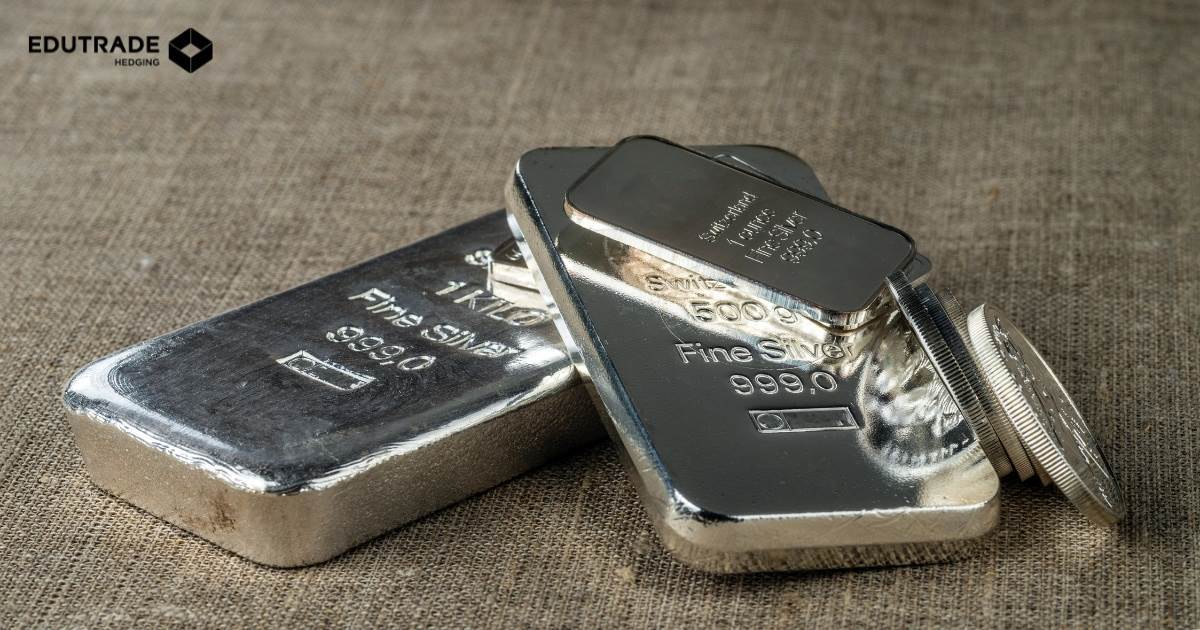
Silver is a chemical element with atomic number 47, represented by the symbol Ag (from Latin argentum). It is a soft, lustrous white metal with the highest electrical and thermal conductivity among metals. Silver occurs naturally not only as native deposits but also in combination with other metals such as zinc, lead, and copper. Much of global silver supply is produced as a by-product from the extraction of these metals.
Leading silver-producing countries include Mexico, China, Peru, Bolivia, and Chile, with Mexico consistently ranking first in annual production. Most silver is derived from copper, zinc, and lead mines, while primary silver mines account for a smaller share of global output ( ~ 28%). From my perspective, understanding these supply sources is crucial for forecasting market trends and price movements.
1.3 Mining and Production
Silver mining begins with ore extraction, followed by processing to separate silver from other minerals using chemical and metallurgical methods. While silver is sometimes mined directly, most production comes as a by-product of zinc, lead, copper, or gold mining operations.
Recycling is becoming an increasingly important source, particularly from electronics, old jewelry, and industrial scrap. In 2024, recycled silver reached a 12-year high, contributing significantly to total supply.
Silver also occurs in specialized mineral deposits such as bornite, chalcocite, and argentite.
1.4 Applications
Silver is a highly versatile metal with numerous essential applications:
- Electronics: Used in printed circuit boards, conductors, and electrical contacts due to superior electrical and thermal conductivity.
- Jewelry: Pure silver and silver alloys are popular for jewelry because of their aesthetic appeal.
- Medical: Leveraging its natural antibacterial properties, silver is applied in wound dressings, medical devices, and protective equipment.
- Solar energy (photovoltaics): Silver plays a critical role in conductive layers of solar cells, enhancing energy conversion efficiency.
- Optical and technical equipment: Silver is used in high-precision reflective mirrors and specialized industrial tools. It is notable that silver’s role in renewable energy and advanced technologies may increasingly support long-term demand.
II. Market Analysis
2.1 Key Market Drivers
Supply and Demand
- Supply: Determined primarily by mining output and recycling. Although mine production has increased modestly, it remains insufficient to offset persistent structural deficits.
- Demand: Strongly driven by industrial use, particularly in renewable energy, technology, and electronics. Industrial demand reached record levels in 2024.
Global Economic and Geopolitical Conditions
Silver prices and demand are influenced by macroeconomic factors such as monetary policy, global economic cycles, financial market volatility, and geopolitical tensions. For example, interest rate movements and market risk sentiment often affect investor allocation to precious metals.
Silver prices and demand are influenced by macroeconomic factors such as monetary policy, global economic cycles, financial market volatility, and geopolitical tensions. For example, interest rate movements and market risk sentiment often affect investor allocation to precious metals. Economic growth, political stability, and developments in major financial markets are crucial in shaping silver’s supply-demand balance. During periods of expansion, industrial activity rises, boosting silver consumption in electronics, renewable energy, and consumer manufacturing. Conversely, economic slowdowns or geopolitical instability may delay industrial production, reducing demand and pressuring prices. Supply is also affected by national policies, environmental regulations, tariffs, and trade restrictions, which impact extraction costs, imports, and global circulation. Bond yields, USD strength, and technical indicators such as moving averages and support-resistance levels further influence investor decisions. In the context of U.S. monetary policy, expectations of rate cuts by the Federal Reserve have contributed to silver’s rally. Analysts suggest that anticipated easing in 2026, combined with a weaker dollar and lower opportunity costs for non-yielding assets, has enhanced silver’s appeal as both a safe-haven and speculative asset. In 2025, prices surpassed USD 60 per ounce, supported by strong industrial demand and accommodative monetary expectations. Global silver consumption remains elevated, with industrial demand projected at ~ 685 million ounces in 2025 and expected to exceed 700 million ounces in the coming years—primarily driven by renewable energy, electronics, electric vehicles, and data infrastructure (Silver Institute). Geopolitical risks, trade tensions, and currency volatility also encourage investment flows into silver. Most reports suggest that global silver supply will remain tight through the mid-2020s, providing medium- to long-term upward pressure on prices.
In the context of U.S. monetary policy, expectations of rate cuts by the Federal Reserve have contributed to silver’s rally. Analysts suggest that anticipated easing in 2026, combined with a weaker dollar and lower opportunity costs for non-yielding assets, has enhanced silver’s appeal as both a safe-haven and speculative asset. In 2025, prices surpassed USD 60 per ounce, supported by strong industrial demand and accommodative monetary expectations.
Global silver consumption remains elevated, with industrial demand projected at ~ 685 million ounces in 2025 and expected to exceed 700 million ounces in the coming years—primarily driven by renewable energy, electronics, electric vehicles, and data infrastructure (Silver Institute).
Geopolitical risks, trade tensions, and currency volatility also encourage investment flows into silver. Most reports suggest that global silver supply will remain tight through the mid-2020s, providing medium- to long-term upward pressure on prices.
2.2 Speculative Trends
Beyond physical demand, silver functions as a financial asset. Investment inflows into ETFs, precious metals funds, and derivative products contributed to record price levels in 2025.
From my perspective, the ongoing expansion of AI data centers, solar energy, and electric vehicle production will continue to support silver’s investment demand in the coming years.
2.3 Correlation with Other Commodities
- Gold: Silver and gold often move together during economic uncertainty, as both are considered safe-haven assets.
- Copper, zinc, lead: Since silver is often produced as a by-product, fluctuations in these metals’ output directly influence silver supply.
- Other precious metals (platinum, palladium): Demand dynamics are largely independent due to differing industrial and jewelry applications.
- Aluminum, iron: While not directly linked to silver, their price trends may reflect broader industrial conditions and global economic health.
Silver’s volatility is also affected by bond yields, USD fluctuations, and interest rate expectations—factors impacting precious metals generally.
Key highlights of the silver market in 2025–2026 include:
- Continued industrial demand growth, reaching multi-year highs.
- Persistent supply deficits, driving upward price pressure.
- Record-high prices and strong investor interest.
These factors indicate that silver is not only a precious metal but also a strategic resource for future industries, particularly in the era of renewable energy and advanced technology. The silver’s strategic importance will likely continue to grow, particularly in emerging markets where green energy investment is accelerating.
III. Effective Investment Strategies for Silver (COMEX)
3.1 Product Understanding
- Develop a comprehensive understanding of silver’s contract specifications on COMEX, including contract size, tick value, margin requirements, and delivery terms.
- Understand silver’s dual role as both a precious metal and an industrial metal, particularly its applications in electronics, renewable energy, artificial intelligence infrastructure, and electric vehicles.
- Monitor global production sources and recycling trends, as supply is highly influenced by mining output in major producing countries and by-product production from base metals.
- Recognize silver’s sensitivity to macroeconomic factors such as USD strength, interest rates, inflation expectations, and monetary policy shifts.
A clear understanding of silver’s structural characteristics provides the foundation for building an effective investment strategy.
3.2 Comprehensive Market Analysis
- Analyze global supply-demand dynamics, particularly structural deficits driven by strong industrial consumption.
- Monitor industrial demand trends in solar energy, electronics, EV production, and data infrastructure.
- Evaluate investment flows into silver ETFs and futures markets to assess speculative positioning.
- Assess macroeconomic indicators, including Federal Reserve policy expectations, bond yields, inflation data, and global economic growth.
A balanced macro and industry-level analysis helps identify medium- and long-term price direction.
3.3 Monitoring Price Movements and Market Data
- Track silver spot prices and COMEX futures contracts, along with trading volume and open interest.
- Follow key industry publications such as the World Silver Survey and major institutional outlook reports.
- Observe correlations with gold and other precious metals to detect safe-haven flows and cross-market signals.
- Monitor USD movements and Treasury yields, as these variables significantly influence precious metal pricing.
Consistent data monitoring allows investors to adjust strategies in response to evolving market conditions.
3.4 Technical & Fundamental Analysis
Apply technical indicators such as trendlines, moving averages, RSI, MACD, and support/resistance levels to determine optimal entry and exit points.
Combine with fundamental analysis, including:
- Global mine production forecasts
- Industrial demand projections
- ETF inflows and speculative positioning data
- Inventory levels and reported supply deficits
- Geopolitical risks affecting key producing regions
Integrating both analytical approaches enhances decision-making precision while managing downside risk.
3.5 Risk Management Strategy
- Determine appropriate position sizing relative to total capital allocation.
- Set clear stop-loss and take-profit levels
- Diversify across asset classes when appropriate to reduce concentration risk.
- Avoid excessive leverage, particularly during periods of high volatility or major economic announcements.
Disciplined risk management is essential to achieving sustainable returns in the silver market.
3.6 Professional Consultation & Investor Education
Investing in Silver (COMEX) offers compelling opportunities, particularly in periods of structural supply tightness, accommodative monetary policy, and strong industrial demand growth. However, silver’s volatility and sensitivity to macroeconomic and geopolitical developments require a well-structured and disciplined strategy. For professional consultation and personalized silver investment strategies, please contact: Hotline: 0866 212 677 – Edu Trade – Leading member of the Vietnam Commodity Exchange, specializing in commodity market analysis, strategic advisory services, and investor education.

Nhận Định 08.04.2025 | Nhóm Kim Loại
#edutrade #giaodichhanghoa #dautuhanghoa Công ty cổ phần EDUTRADE tự hào là đơn vị tư…

Nhận Định 07.04.2025 | Nhóm Kim Loại
#edutrade #giaodichhanghoa #dautuhanghoa Công ty cổ phần EDUTRADE tự hào là đơn vị tư…

Nhận Định 04.04.2025 | Nhóm Kim Loại
#edutrade #giaodichhanghoa #dautuhanghoa Công ty cổ phần EDUTRADE tự hào là đơn vị tư…

Nhận Định 03.04.2025 | Nhóm Kim Loại
#edutrade #giaodichhanghoa #dautuhanghoa Công ty cổ phần EDUTRADE tự hào là đơn vị tư…

Nhận Định 02.04.2025 | Nhóm Kim Loại
#edutrade #giaodichhanghoa #dautuhanghoa Công ty cổ phần EDUTRADE tự hào là đơn vị tư…

Nhận Định 01.04.2025 | Nhóm Kim Loại
#edutrade #giaodichhanghoa #dautuhanghoa Công ty cổ phần EDUTRADE tự hào là đơn vị tư…

Nhận Định 31.03.2025 | Nhóm Kim Loại
#edutrade #giaodichhanghoa #dautuhanghoa Công ty cổ phần EDUTRADE tự hào là đơn vị tư…

Nhận Định 27.03.2025 | Nhóm Kim Loại
#edutrade #giaodichhanghoa #dautuhanghoa Công ty cổ phần EDUTRADE tự hào là đơn vị tư…

Nhận Định 25.03.2025 | Nhóm Kim Loại
#edutrade #giaodichhanghoa #dautuhanghoa Công ty cổ phần EDUTRADE tự hào là đơn vị tư…

Nhận Định 24.03.2025 | Nhóm Kim Loại
#edutrade #giaodichhanghoa #dautuhanghoa Công ty cổ phần EDUTRADE tự hào là đơn vị tư…