


 Facebbook
 Tiktok
 Youtube
 Zalo
Zalo Linkedin
 Investment community
 Instagram
|
Robusta Coffee ( LRC – ICE EU ) |
|
| Size | Full |
| Exchange | Intercontinental Exchange Europe ( ICE EU ) |
| Commodity code | LRC |
| Contract lot value (market price) | Commodity price * contract size |
| Contract size | 10 tons |
| Margin (changes according to MXV) | 10% of contract lot value |
| Trading price step | $1 ~ $10/lot |
| Quoted unit | usd/ton |
| Profit/loss fluctuation $1/lot | $10 |
| Trading period | 1;3;5;7;9;11 |
| Trading schedule | Monday – Friday |
| Trading session (winter opens 60 minutes late) | 15:00 – 23:30 |
| Price range | Not specified |
| Quality standard | Robusta coffee type 1, type 2, type 3 |
| Delivery Registration Date | 4th working day, before the first notice day |
| First notice day | 4th working day before the last working day of the expiration month |
| Last trading day | 4th working day before the last working day of the expiration month at 19h30 |
| Payment method | Physical delivery |
I. Product Overview
1. General Introduction
Robusta coffee (Coffea canephora), also known as canephora coffee, originates from inland West Africa, particularly in countries such as the Democratic Republic of the Congo, Uganda, and Angola, before spreading to other regions worldwide, including Asia (Vietnam, Indonesia, Thailand, China, etc.) and parts of Africa. Robusta currently ranks second in Vietnam’s coffee production structure and plays a dominant role in the country’s coffee export industry.
Vietnam is the world’s largest producer of Robusta coffee, accounting for over 40% of global Robusta output. This position is supported by extensive cultivation areas concentrated in the Central Highlands (including Dak Lak, Lam Dong, Gia Lai, Kon Tum, and Dak Nong provinces), appropriate farming techniques, and farmers’ long-standing experience in Robusta cultivation and harvesting. Robusta represents a very high proportion of Vietnam’s total coffee output (approximately 90–95%), making Vietnam a key supply source for global roasters and the instant coffee market. According to forecasts for the 2025/26 crop year, Vietnam’s coffee production is expected to reach approximately 30–31 million bags (60 kg per bag), of which nearly 96% will be Robusta.

2. Uses and Benefits
2.1. Benefits for Human Health
- Mental alertness: Robusta coffee contains a high caffeine content, which stimulates the central nervous system and enhances alertness and concentration.
- Cardiovascular health and reduced risk of chronic diseases: Broad scientific evidence suggests that moderate coffee consumption (Arabica or Robusta) is associated with a reduced risk of cardiovascular disease, type 2 diabetes, and certain chronic illnesses.
- Antioxidant properties: Robusta coffee is rich in antioxidants, such as polyphenols, which help protect the body from damage caused by free radicals.
- Liver health support:Comprehensive studies indicate that coffee consumption is associated with a lower risk of liver cirrhosis and chronic liver disease, partly due to caffeine’s role in promoting protective metabolic processes.
- Weight management support:Robusta coffee may help increase metabolism and calorie burning, thereby supporting effective weight management.
2.2. Economic Contributions
Economic impact: Robusta is a key cash crop in many tropical countries, particularly Vietnam, providing stable income for farmers and making a significant contribution to agricultural exports.
In the Central Highlands region, Robusta coffee cultivation generates rural employment and promotes local economic development due to its large cultivation area and high commercial value.
Environmental considerations: Coffee plants absorb CO₂ during growth and can help stabilize soil on slopes, reducing erosion when properly managed. However, long-term and intensive coffee cultivation without sustainable practices may lead to soil acidification and reduced biodiversity, as highlighted by several studies conducted in Vietnam.
3. Cultivation and Harvesting
3.1. Cultivation Characteristics of Robusta Coffee
Robusta coffee is well adapted to tropical environments, with strong tolerance to drought and resistance to certain pests and diseases. These characteristics make it a popular choice for cultivation in regions with harsher climatic conditions compared to Arabica coffee.
Temperature:
Robusta coffee thrives in hot and humid tropical climates, with an optimal average temperature range of 24–26°C.
Suitable temperatures by growth stage:
- Seedlings: 24–27°C
- Young plants: 20–26°C
- Mature trees: 18–28°C
- Flowering and fruit setting: 20–24°C
Soil:
Robusta coffee is not overly soil-sensitive and can grow in various soil types such as basaltic red soil, gray soil, reddish-brown soil, and ferralitic soil. However, suitable soils should meet the following criteria:
- Loose structure with good drainage,
- pH ranging from 5.5 to 6.5,
- High nutrient content, especially nitrogen (N), phosphorus (P), and potassium (K).
Soil must allow adequate drainage to prevent waterlogging while retaining sufficient moisture to support nutrient absorption.
Water:
Robusta coffee prefers humid conditions, with average annual rainfall requirements of 1,200–2,000 mm. Water supply mainly comes from rainfall and irrigation. The crop requires the most water during periods of vigorous growth, flowering, and fruit setting. Proper water management is essential to avoid waterlogging, which can harm the plants..
Light:
Robusta coffee is light-loving and requires ample sunlight for photosynthesis and healthy growth. Therefore, it is typically cultivated in tropical and subtropical regions with high solar exposure.
However, during the early stages, young plants require shade to avoid excessive direct sunlight. As the plants mature, adequate sunlight is necessary to ensure effective flowering and fruit development.
Additional considerations for Robusta cultivation include:
- Selecting varieties suitable for local climate and soil conditions,
- Planting at appropriate densities to allow sufficient space for growth,
- Applying balanced fertilization at each growth stage,
- Timely pest and disease control.
3.2. Harvesting Characteristics and Yield of Robusta Coffee
Robusta coffee offers several advantages, including resistance to diseases such as coffee leaf rust, stem borers, and nematodes, while also delivering high yields.
Harvesting:
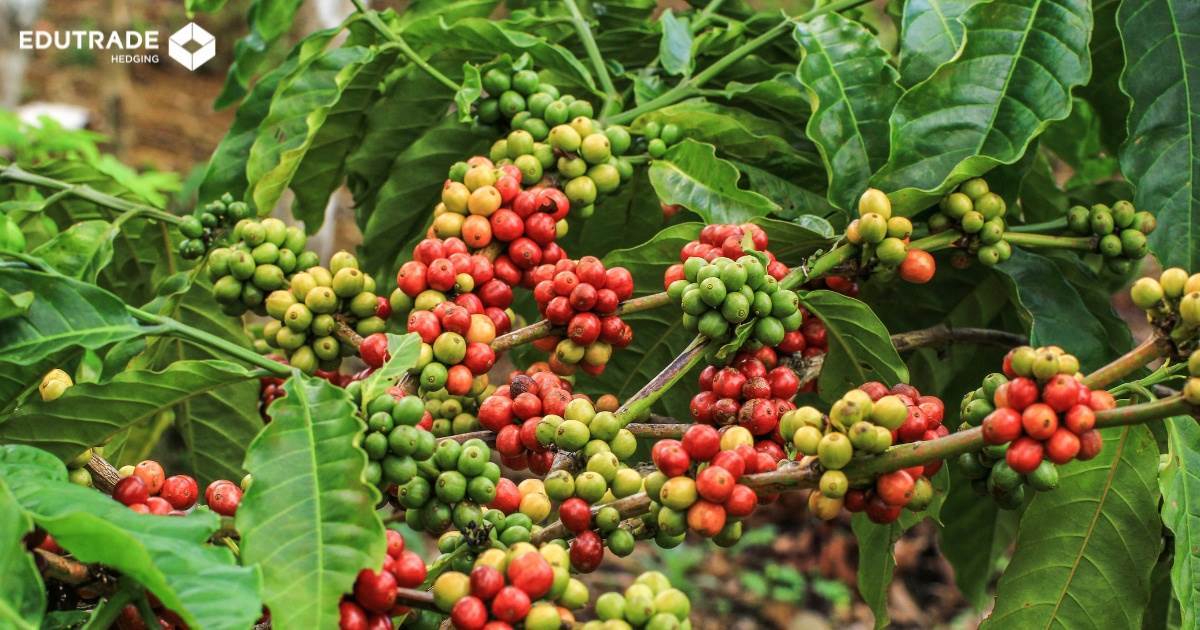
Robusta coffee typically begins bearing fruit and can be harvested approximately 2–3 years after planting, when the trees have matured sufficiently to produce commercial yields.
4. Global Market Landscape
Global demand for Robusta coffee is expected to continue growing due to its competitive pricing and strong, bold flavor profile. Emerging markets such as China, India, and Southeast Asian countries are expected to be key drivers of this growth.
In addition, diversified processing methods—from roasted coffee to instant coffee and ready-to-drink products—have further increased consumer demand. As a result, Robusta coffee prices are expected to fluctuate in line with market supply and demand dynamics.
Production:
Thanks to its tropical climate and abundant sunlight favorable for coffee cultivation, Vietnam is currently the world’s largest producer and exporter of Robusta coffee, holding the highest share of global Robusta output. Brazil is the world’s largest coffee producer when considering all varieties (Arabica + Robusta). Although Brazil’s Robusta production is growing rapidly, it has not yet surpassed Vietnam.
Robusta Coffee Prices:
Robusta coffee prices are highly volatile, influenced by supply-demand conditions, climate factors, pests and diseases, trade policies, and global market dynamics. In recent periods, Robusta prices on global exchanges have fluctuated widely, often exceeding USD 2.5/kg, with many periods during 2024–2025 reaching approximately USD 3–6/kg or higher, depending on contract maturities and market conditions. (“According to ycharts.com – Coffee Robusta Price (I:CRP), 11/2025”)
Global Supply and Demand:
During 2024–2025, Vietnam’s coffee exports (primarily Robusta) exceeded 1.5 million tons, generating a record export value of approximately USD 8.4 billion (“According to Vietnamnet”).
- Germany was the largest market by export value, followed by the United States and Italy.
- The European Union continued to account for the largest share of Vietnam’s coffee exports, while Asian markets expanded rapidly.
- This trend reflects a shift and diversification in consumption markets compared to the 2020 period..
II. Market Analysis
Factors Affecting Global Robusta Coffee Production
1. Natural and Cultivation Technology Factors
Climatic conditions:
Temperature, rainfall, sunlight, and soil conditions significantly affect Robusta coffee growth. Additionally, Robusta is vulnerable to pests and diseases such as aphids, red spider mites, and fungal infections.
Plant varieties:
The use of high-yield, pest-resistant Robusta varieties contributes to increased production. Combined with advanced farming practices—such as balanced fertilization, efficient irrigation, and effective pest control—these measures enhance productivity. Proper pruning, fertilization, irrigation, and pest management are essential to ensure healthy growth and high yields.
2. Economic and Market Factors
The supply-demand balance directly affects Robusta coffee production.
Based on the following principles:
When supply exceeds demand: prices tend to decline.
When demand exceeds supply: prices tend to rise.
Political and economic policies:
Leading coffee-producing countries bear significant responsibility for exports. Political instability can disrupt cultivation, export, and import systems. A stable political environment is therefore essential for the sustainable development of the Robusta coffee sector.
Governments may implement policies to support Robusta production, such as: Price support measures (subsidies, export taxes adjustments) to improve farmer profitability, Reducing taxes on agricultural inputs such as fertilizers and pesticides to lower production costs, Supporting investment in advanced equipment and technologies to improve yields and reduce costs, Trade policy support, including Free Trade Agreements (FTAs), to expand Robusta coffee export markets.

3. Industries Closely Related to Robusta Coffee
Fertilizer industry:
Rising demand for fertilizers in Robusta cultivation drives growth in the fertilizer industry. Manufacturers must supply fertilizers that meet the nutritional requirements of Robusta coffee to ensure optimal growth and high yields.
Common fertilizers used for Robusta coffee include:
NPK fertilizers: NPK 15-15-15, NPK 20-10-10, NPK 12-12-17+TE
Single fertilizers: Urea, superphosphate, potassium chloride
Organic fertilizers: Manure, compost, green manure
According to the Ministry of Agriculture and Rural Development (2022), Vietnam uses an average of 350 kg of fertilizer per hectare for Robusta coffee, underscoring the significant impact of the fertilizer industry on Robusta production.
Pesticide industry:
Robusta coffee is susceptible to various pests and diseases, increasing demand for pesticides and supporting the development of the pesticide manufacturing sector.
Coffee processing industry:
The Robusta coffee processing industry must invest in advanced equipment and technologies to improve product quality and meet growing market demand.
Coffee export–import and logistics supply chain:
Expanding Robusta coffee export markets is essential to increase revenue and promote industry growth. The logistics sector must provide fast, safe, and efficient transportation services to support the Robusta coffee industry.
4. Key Strategies for Effective ROBUSTA COFFEE Investment
In-Depth Understanding of the Product and Trading Specifications
- Develop a comprehensive understanding of Robusta coffee as a globally traded agricultural commodity, including its physical characteristics, quality grades, caffeine content, end-use applications (roasted coffee, instant coffee, ready-to-drink products), and its role in the global coffee supply chain.
- Fully understand the specifications of Robusta coffee futures contracts traded on international exchanges (such as ICE), including contract size, pricing unit, minimum tick size, delivery months, delivery standards, delivery locations, and trading hours.
- Closely monitor key Robusta coffee market indicators, such as:
- Open Interest and managed money positioning,
- Certified Robusta coffee inventories at exchange warehouses,
- Production and export data from major producing countries (especially Vietnam and Brazil),
- Futures forward curve structure (contango/backwardation),
- Currency movements affecting coffee trade.
→ These indicators help investors assess supply–demand dynamics and identify short- to medium-term Robusta coffee price trends.
Utilizing Hedging and Risk Management Instruments
Robusta coffee futures play a critical role for:
- Coffee producers and exporters: Locking in selling prices to reduce revenue uncertainty caused by price volatility.
- Roasters and instant coffee manufacturers: Hedging raw material costs to protect profit margins.
- Hedge funds and financial investors: Taking advantage of Robusta coffee price fluctuations while diversifying and managing risk within commodity portfolios.
Staying Informed on Factors Influencing Robusta Coffee Prices
- Robusta coffee prices are highly sensitive to:
- Weather conditions in major producing regions, particularly Southeast Asia and Brazil,
- Crop yields, pests, and diseases,
- Government policies, export regulations, and trade agreements,
- Currency fluctuations impacting export competitiveness,
- Global coffee consumption trends, especially demand for instant coffee.
- Investors should regularly monitor:
- Production and export reports from major producing countries,
- Certified inventory levels at exchanges,
- Weather indicators (rainfall, drought risk, El Niño/La Niña developments),
- Policy announcements related to agriculture and trade.
→ Continuous monitoring enables more accurate assessment of Robusta coffee market fundamentals and price direction.
Consulting Commodity Market Experts
- Edu Trade is a reputable organization and a leading member of the Vietnam Mercantile Exchange (MXV), specializing in consultancy and training for commodity derivatives investment.
- With over 10 years of practical market experience, Edu Trade’s expert team continuously monitors global commodity markets, delivering timely, objective, and data-driven insights.
- Edu Trade regularly organizes professional training programs on commodity derivatives, supporting investors in:
- Develop effective trading strategies,
- Managing risks proactively,
- Avoiding common and preventable investment mistakes.
Edu Trade hopes the above insights provide investors with a clearer and more practical understanding of ROBUSTA COFFEE.
If you are interested in trading Robusta coffee futures or participating in the commodity derivatives market, please contact our Hotline: 0866.212.677 for professional consultation and dedicated support.

Nhận Định 08.04.2025 | Nhóm Nguyên Liệu
#edutrade #giaodichhanghoa #dautuhanghoa Công ty cổ phần EDUTRADE tự hào là đơn vị tư…

Nhận Định 07.04.2025 | Nhóm Nguyên Liệu
#edutrade #giaodichhanghoa #dautuhanghoa Công ty cổ phần EDUTRADE tự hào là đơn vị tư…

Nhận Định 04.04.2025 | Nhóm Nguyên Liệu
#edutrade #giaodichhanghoa #dautuhanghoa Công ty cổ phần EDUTRADE tự hào là đơn vị tư…

Nhận Định 03.04.2025 | Nhóm Nguyên Liệu
#edutrade #giaodichhanghoa #dautuhanghoa Công ty cổ phần EDUTRADE tự hào là đơn vị tư…

Nhận Định 02.04.2025 | Nhóm Nguyên Liệu
#edutrade #giaodichhanghoa #dautuhanghoa Công ty cổ phần EDUTRADE tự hào là đơn vị tư…

Nhận Định 01.04.2025 | Nhóm Nguyên Liệu
#edutrade #giaodichhanghoa #dautuhanghoa Công ty cổ phần EDUTRADE tự hào là đơn vị tư…

Nhận Định 31.03.2025 | Nhóm Nguyên Liệu
#edutrade #giaodichhanghoa #dautuhanghoa Công ty cổ phần EDUTRADE tự hào là đơn vị tư…

Nhận Định 27.03.2025 | Nhóm Nguyên Liệu
#edutrade #giaodichhanghoa #dautuhanghoa Công ty cổ phần EDUTRADE tự hào là đơn vị tư…

Nhận Định 25.03.2025 | Nhóm Nguyên Liệu
#edutrade #giaodichhanghoa #dautuhanghoa Công ty cổ phần EDUTRADE tự hào là đơn vị tư…

Nhận Định 24.03.2025 | Nhóm Nguyên Liệu
#edutrade #giaodichhanghoa #dautuhanghoa Công ty cổ phần EDUTRADE tự hào là đơn vị tư…