


 Facebbook
 Tiktok
 Youtube
 Zalo
Zalo Linkedin
 Investment community
 Instagram
US crude oil inventories are once again moving lower, and the latest EIA update has drawn the market’s attention for good reason. When stockpiles keep shrinking, traders, refiners, and consumers all start asking the same question: is the oil market tightening faster than expected? This newest reading suggests the answer may be yes, or at least that supply and demand are balancing in a way that continues to support prices.
According to the U.S. Energy Information Administration’s weekly petroleum status report, both crude and gasoline inventories continued to fall, reinforcing the same pattern seen in recent weeks. For readers who want a broader context on how inventory trends affect pricing, this guide to WTI crude explains why benchmark prices react so quickly to supply changes. For the original report, see the OilPrice summary of the EIA inventory data.
What the EIA update is signaling
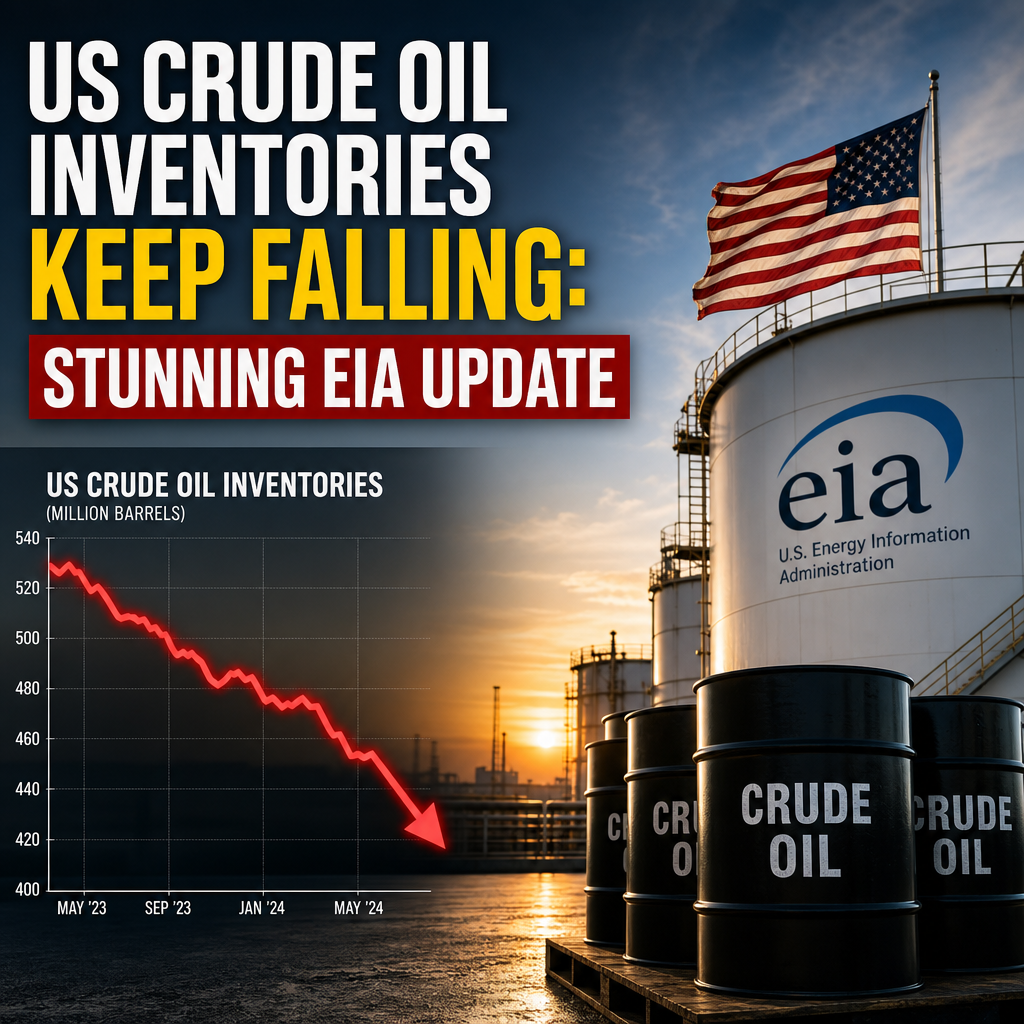
The latest EIA figures show that crude oil inventories in the United States fell again, extending a recent run of declines. That matters because inventories act like a buffer. When stockpiles are high, the market has more flexibility to absorb supply disruptions or demand shifts. When stockpiles fall, that cushion gets thinner.
A persistent inventory draw can point to several things happening at once. Refiners may be processing more crude into gasoline, diesel, and jet fuel. Imports may be running below normal levels. Domestic production may be stable but not enough to offset strong demand. Sometimes exports also play a role, particularly when U.S. crude is competitive in global markets.
The key takeaway is that the market is not seeing a dramatic buildup of excess supply. Instead, the data suggests a tighter-than-expected balance, which tends to support crude prices if the trend continues.
Why falling crude inventories matter
Crude oil inventories are more than just a number on a government report. They help shape expectations for price direction, refining margins, and downstream fuel costs. When inventories fall, it often means the market is consuming more crude than it is replenishing.
That can have several implications:
– Higher price support: Lower stockpiles can make crude prices more resilient because buyers worry about future availability.
– Stronger refinery activity: Falling inventories often reflect robust refining runs, which can boost demand for crude feedstock.
– Tighter product markets: If refiners are turning crude into fuel quickly, gasoline and diesel markets may also remain firm.
– Sensitive reaction to disruptions: With less inventory cushion, any unplanned outage or supply shock can have a bigger price impact.
For energy analysts, the inventory trend is often a better short-term gauge than broader headlines. Even when macroeconomic concerns dominate the news cycle, a consistent draw in crude stocks can reveal that physical demand is still healthy.
What may be driving the decline
Several factors can explain why crude inventories keep falling. In many weeks, it is not one single driver but a combination of influences that together create the draw.
Strong refinery demand
One of the most common reasons for a drop in crude inventories is increased refinery utilization. Refineries buy crude oil and process it into finished products. When they ramp up operations, they pull more crude from storage.
Seasonal maintenance periods can temporarily reduce crude runs, but when refiners come back online or increase throughput to meet fuel demand, inventory levels can fall quickly. A strong refining slate often indicates confidence in product demand, particularly for gasoline during driving season and distillates during industrial or freight-heavy periods.
Steady domestic consumption
Even with economic uncertainty, U.S. fuel demand can remain surprisingly resilient. Travel activity, freight movement, and industrial operations all require energy. If gasoline and diesel consumption remain firm, refiners keep drawing crude to keep product tanks supplied.
This is one reason analysts pay close attention not only to crude inventories but also to gasoline and distillate data. A crude draw paired with healthy product demand is generally a more bullish sign than a crude draw caused by weakening imports alone.
Export activity and global demand
The United States has become a major player in global crude markets, and export flows can influence domestic inventory levels. When overseas demand is strong, more U.S. crude can leave the country, reducing domestic stocks.
Global supply conditions also matter. If international markets are tighter, U.S. barrels become more attractive. That can amplify inventory declines even if domestic production remains steady. In other words, the U.S. oil market does not operate in isolation. It is tied into a broader global system where shipping flows, price spreads, and geopolitical developments all influence storage levels.
Supply discipline and production patterns
Production growth in the U.S. has been substantial over the past several years, but it is not always enough to offset consumption and exports in real time. If producers slow drilling activity, if pipeline logistics shift, or if weather disrupts output, inventories can fall faster than expected.
Even modest changes in production trends can matter when the market is already balanced tightly. The current inventory pattern suggests that supply may not be building fast enough to create a cushion.
How traders interpret the EIA report
For oil traders, the EIA report is often a catalyst for short-term price action. A larger-than-expected draw in crude inventories can push futures higher, especially if it comes alongside draws in gasoline and distillates. Conversely, a surprise build can pressure prices quickly.
But the market does not look at the headline crude number in isolation. Traders also examine:
– refinery utilization rates
– import and export volumes
– implied demand for gasoline and distillates
– production levels
– inventory changes at key delivery hubs
When all of those indicators point in the same direction, the market can react strongly. In this case, the continuing crude draw strengthens the narrative that supply is not overwhelming demand.
What this means for oil prices
The price impact of falling inventories depends on whether the trend is temporary or sustained. A single weekly decline can move prices, but a multi-week pattern is more important. If the EIA continues to show stockpile reductions, the market may interpret that as evidence of a durable tightening cycle.
That could keep upward pressure on crude benchmarks such as WTI and Brent, especially if geopolitical risks, OPEC+ production policy, or seasonal demand also remain supportive. Still, price gains are never guaranteed. Concerns about global growth, higher interest rates, or a slowdown in fuel consumption can limit upside.
Right now, the balance of evidence leans toward a firmer market structure. Falling inventories usually do not go unnoticed for long, and traders will likely keep watching each new EIA release for confirmation.
The broader economic backdrop
The inventory story is unfolding against a complicated macroeconomic environment. Inflation concerns, central bank policy, and uneven growth across major economies all influence energy demand expectations. A strong inventory draw can sometimes counter broader pessimism by showing that physical consumption remains intact even when financial markets are cautious.
For consumers, the implications are indirect but important. Tight oil inventories can contribute to firmer fuel prices at the pump if crude costs rise and product markets remain strong. For refiners and producers, however, a tighter market may improve margins and support profitability.
That is why this EIA update matters beyond the weekly headline. It is part of a larger signal about how energy supply and demand are evolving in real time.
Looking ahead
The big question now is whether the decline in U.S. crude inventories will continue. If it does, the market may have to adjust expectations for a tighter supply environment. If the trend reverses, it could suggest that recent draws were driven by temporary factors rather than a lasting shift.
For now, the message from the EIA is clear: U.S. crude oil inventories are not rebuilding. They are falling, and that keeps the market on alert. In an industry where balance is everything, that kind of update can move sentiment quickly and keep traders focused on every new data point.