


 Facebbook
 Tiktok
 Youtube
 Zalo
Zalo Linkedin
 Cộng đồng đầu tư
 Instagram
The IEA sees massive oil surplus in 2027 as global supply growth is expected to outpace demand by a wide margin, signaling a potential turning point for energy markets, prices, and producer strategy. The latest outlook points to a future in which robust production from both OPEC+ and non-OPEC countries collides with slower demand growth, especially as transportation electrification, efficiency gains, and economic uncertainty reshape consumption patterns. For traders, policymakers, and energy companies, that combination could mark one of the most significant shifts in the oil market in years.
What the IEA’s outlook is signaling
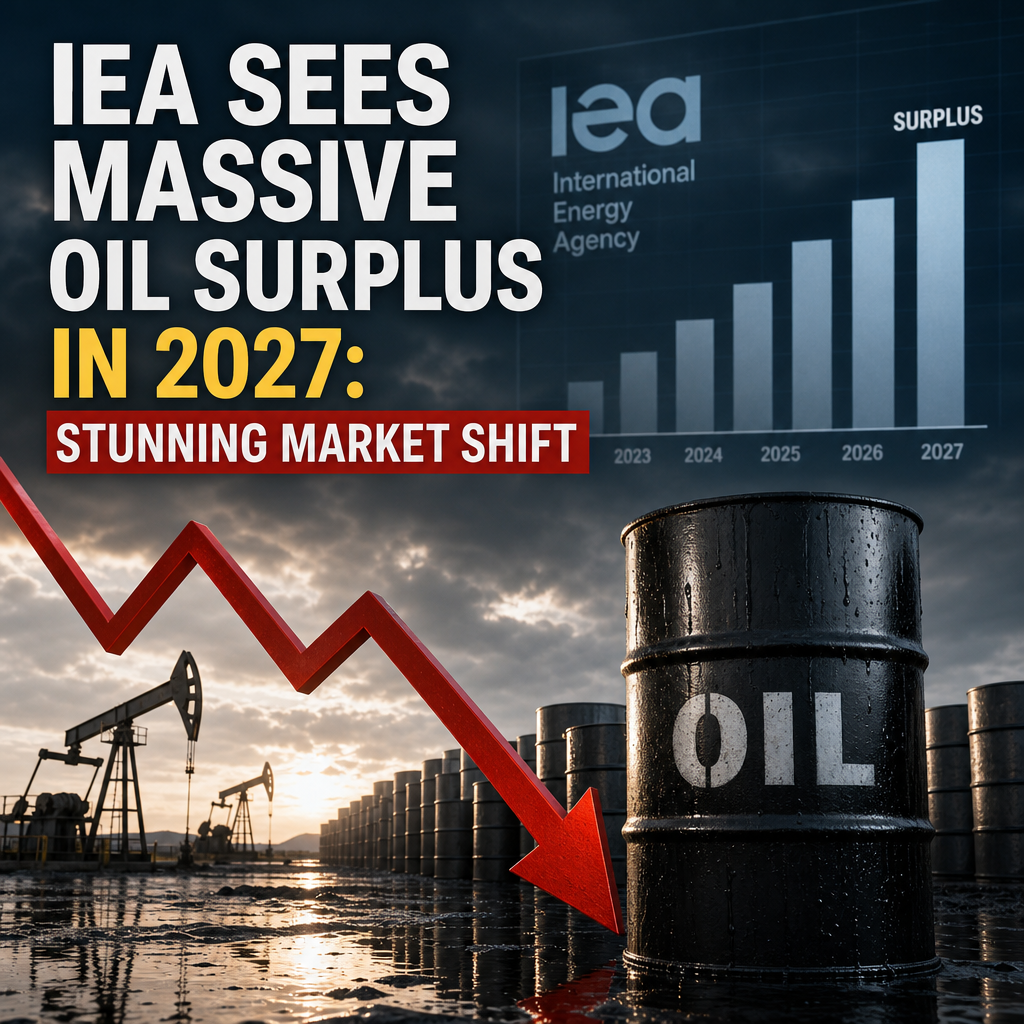
The International Energy Agency’s forecast suggests that oil markets may be moving toward a period of structural oversupply by 2027. In simple terms, that means the world could be producing more crude and refined products than it consumes, creating downward pressure on prices and forcing producers to compete more aggressively for market share.
A surplus of this size matters because it does not just influence benchmark prices like Brent and WTI. It affects the economics of shale drilling, offshore megaprojects, refinery margins, shipping costs, strategic petroleum reserve policy, and even national budgets in oil-dependent economies. When supply runs ahead of demand for an extended period, the market’s center of gravity shifts from scarcity to abundance.
The IEA has been warning for some time that demand growth is slowing compared with the rapid recovery seen after the pandemic. At the same time, supply is still expanding as producers continue to bring new capacity online. The result is a market that may look balanced in the near term but increasingly tilted toward excess later in the decade.
Why a massive oil surplus could emerge by 2027
Several forces are converging to create the possibility of a large surplus.
1. Strong production growth outside traditional supply centers
Non-OPEC producers, especially the United States, Brazil, Guyana, and Canada, continue to add barrels to global supply. U.S. shale remains particularly influential because it can respond relatively quickly to price signals. Even if growth rates vary year to year, the sector has become a persistent source of incremental supply.
Brazil and Guyana are also important. Deepwater projects in those countries have long lead times, but once they start flowing they can deliver large volumes over many years. This steady expansion adds to the overall global cushion.
2. OPEC+ policy may not absorb all of the excess
OPEC+ has historically acted to stabilize the market through coordinated cuts. However, the group’s ability to fully offset global oversupply is limited. If members prioritize revenue needs or market share, production discipline becomes harder to maintain.
In a weaker market, some members may choose to produce more rather than less, especially if budget pressures are intense. That can deepen the imbalance and accelerate the shift toward a surplus. For a broader look at related supply dynamics, see this update on falling U.S. crude oil inventories.
3. Slower demand growth
Oil demand is still growing globally, but not at the pace seen in earlier decades. Electric vehicle adoption is gradually reducing gasoline demand in some markets, while fuel efficiency standards and changing consumer behavior are also limiting growth. In addition, slower economic activity in major economies can dampen industrial fuel use and transportation demand.
Air travel and petrochemicals may continue to support overall oil consumption, but they may not be enough to offset the broader slowdown. The IEA’s message is that demand is not collapsing; rather, it is becoming less able to keep up with the supply pipeline.
What a 2027 oil surplus means for prices
A major oil surplus typically leads to softer prices, although the exact impact depends on how large the gap becomes and how quickly inventories build. If surplus barrels enter storage facilities around the world, market participants usually interpret that as a signal of weaker balance ahead.
Lower prices could benefit consumers in the form of cheaper gasoline, diesel, and jet fuel. That would be welcome for households and businesses facing inflationary pressure. However, for oil producers, the consequences are less favorable. Cash flow, capital spending, and dividend policies could all come under strain if prices remain depressed.
A sustained oversupply environment can also increase volatility. Even when the broad trend is downward, prices may spike on geopolitical risk, production outages, or sudden changes in policy. The market could become more sensitive to headlines because traders will be watching inventory data and producer responses closely.
Winners and losers in an oversupplied market
The effects of a large surplus will not be evenly distributed.
Likely winners
Consumers are the most obvious beneficiaries of lower oil prices. Transport costs may ease, which can ripple through supply chains and reduce inflation.
Refiners may also benefit in the short term if cheaper crude improves margins, although this depends on product demand and refinery capacity. Some airlines, shipping firms, and petrochemical manufacturers could see input costs fall, improving profitability.
Countries that import large amounts of oil may enjoy a trade balance boost if prices decline significantly. That can create fiscal breathing room and help central banks manage inflation.
Likely losers
Oil-exporting countries with heavy budget dependence on crude revenues may face serious fiscal challenges. Governments in these economies often plan spending around a certain oil price. If prices fall below that threshold for long enough, deficits can widen quickly.
Exploration and production companies may also struggle. High-cost projects become harder to justify, drilling activity may slow, and capital discipline becomes more important. Smaller shale operators are especially vulnerable if lower prices squeeze margins.
Geopolitical implications of a surplus
A massive oil surplus does more than change price charts. It can alter geopolitical leverage.
When supply is abundant, importing countries often gain negotiating power. They can diversify procurement, buy at lower prices, and reduce the urgency of any one supplier relationship. Meanwhile, some exporting states may find their influence diminished if buyers are less dependent on their barrels.
That said, geopolitical risk does not disappear in a surplus market. Conflicts, sanctions, pipeline disruptions, and maritime chokepoints can still remove barrels unexpectedly. In a world with larger inventories, the market may absorb such shocks more easily, but the underlying volatility remains.
The broader strategic effect is that oil may become less able to command the same degree of market power it once did. That does not make it irrelevant, but it does suggest a gradual rebalancing in favor of more resilient and diversified energy systems.
How companies and investors may respond
Energy companies are likely to become more selective if they believe 2027 will bring excess supply. That could mean fewer greenfield projects, tighter spending controls, and greater emphasis on low-cost production. Companies with strong balance sheets and flexible operations may outperform those reliant on high prices.
Investors may also adjust their expectations. Rather than betting on a long-term price rally, they may focus on volatility strategies, dividend sustainability, or exposure to lower-cost producers. Commodity traders could become more active around inventory cycles and OPEC+ announcements.
At the same time, lower oil prices may support sectors that benefit from cheaper energy inputs. Airlines, logistics firms, chemical producers, and consumer discretionary companies could all see some relief if fuel costs decline meaningfully.
The bigger picture for the energy transition
An oil surplus in 2027 would also reinforce the long-term transition narrative. If demand growth is slowing while non-fossil alternatives keep expanding, the market may begin to price oil less as a scarce strategic commodity and more as a mature, competitive fuel.
That does not mean the end of oil. The world will still rely on it for transportation, industry, and petrochemicals for years to come. But a surplus environment can accelerate investment shifts, pushing capital toward cleaner technologies, grid infrastructure, battery storage, and efficiency improvements.
For context on how supply swings can affect other energy markets, the OilPrice report on the IEA’s surplus outlook provides a useful reference point.
In this sense, the IEA’s projection is about more than barrels and benchmarks. It reflects a broader transformation in how energy is produced, consumed, and valued.
What to watch next
The path to 2027 will depend on several critical variables:
- OPEC+ production discipline
- U.S. shale output resilience
- Global economic growth
- EV adoption rates
- Geopolitical disruptions
- Inventory trends in major consuming regions
If demand surprises to the upside or producers cut aggressively, the surplus could be smaller than expected. But if supply continues to rise and consumption weakens further, the market may face a much more pronounced downturn in prices.
For now, the message from the IEA is clear: oil may be heading toward a very different phase of the cycle. A massive surplus in 2027 would not just be a statistical forecast. It could represent a stunning market shift with broad consequences for consumers, producers, governments, and investors around the world.