


 Facebbook
 Tiktok
 Youtube
 Zalo
Zalo Linkedin
 Cộng đồng đầu tư
 Instagram
Global oil inventories are once again at the center of market attention as traders weigh softer geopolitical risk against signs of persistent oversupply. For a brief period, optimism around a potential easing of tensions involving Iran supported expectations that supply disruptions could tighten the market. That sentiment is now fading. Instead of a clear bullish shift, the oil complex is confronting a broader reality: inventories remain ample, demand growth is uneven, and any relief from geopolitical uncertainty may be offset by barrels already flowing into storage.
The latest market tone reflects a familiar tension in crude pricing. On one hand, political developments in the Middle East can quickly alter expectations for supply security and shipping routes. On the other, the physical market keeps the score. Tank farms, floating storage, refinery runs, and product stockpiles often tell a more grounded story than headlines do. At present, that story suggests the market is still dealing with a surplus, even as some traders had hoped diplomatic progress involving Iran could trigger a more durable tightening in prices.
Why Global Oil Inventories Matter
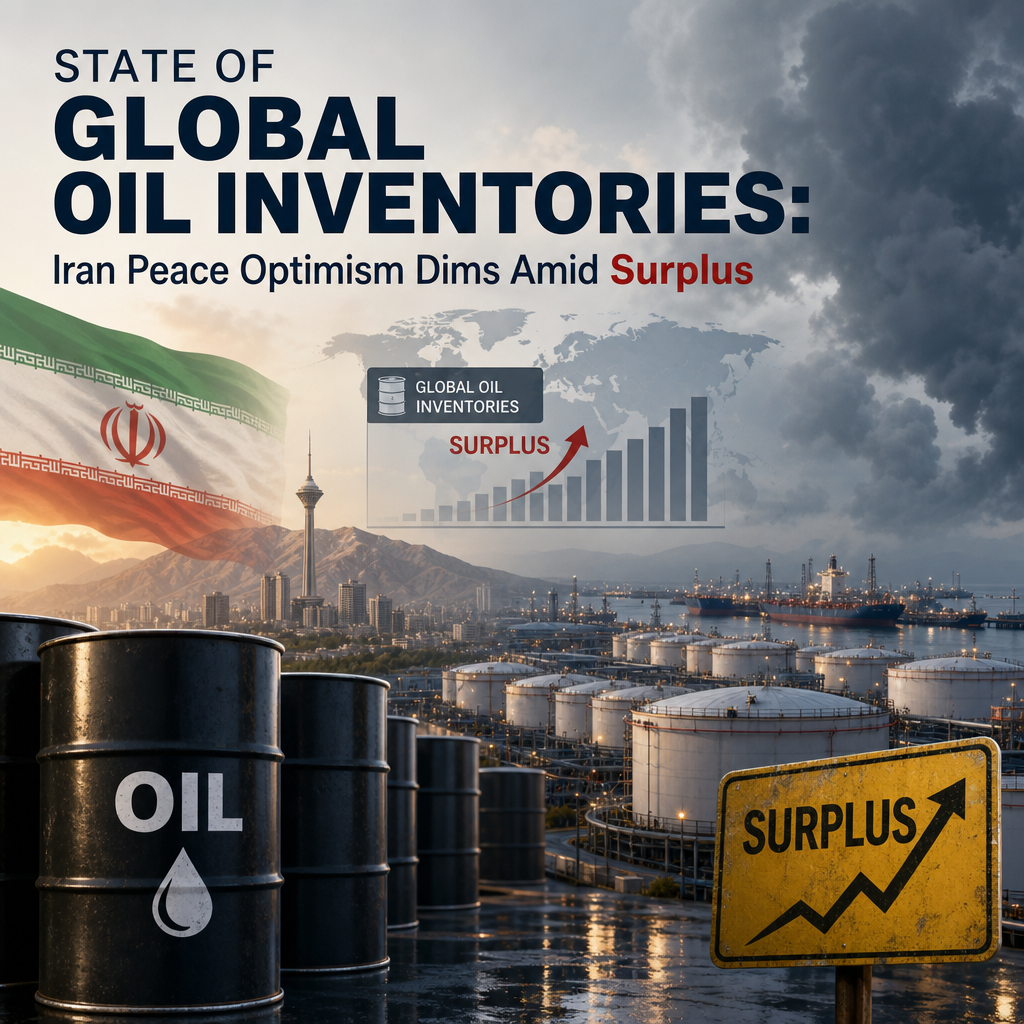
Oil inventories are one of the clearest measures of balance in the market. When stocks are rising, supply is generally outpacing demand. When they fall, consumption, refining activity, or export demand is absorbing more barrels than producers are supplying. Because crude and refined product inventories sit at the center of the value chain, they influence everything from prompt contract pricing to refinery margins and shipping demand.
The current state of global oil inventories points to a market that is not yet convincingly short of supply. Even when there are regional draws, broader stock levels can remain elevated if production from major exporters, resilient U.S. output, and slower-than-expected demand growth continue to add barrels. In that environment, prices may struggle to sustain rallies unless there is a material disruption or a clear acceleration in consumption.
For traders, this means headlines alone are not enough. A diplomatic breakthrough or a reduction in tensions can shift risk premiums, but if inventories remain comfortable, those gains may be limited and short-lived.
Iran Peace Optimism Dims Amid a Heavy Supply Backdrop
Expectations that a calmer political environment around Iran might ease market anxiety have recently lost momentum. Earlier optimism suggested that reduced tension could support stability in energy flows and perhaps remove a major source of uncertainty from the market. But as that optimism fades, it becomes harder to argue for a stronger crude market based on geopolitics alone.
Iran remains important to the oil balance because of its role as a producer and exporter, and because any change in sanctions pressure can alter supply expectations. Yet even if diplomatic progress improves sentiment, it does not automatically erase the underlying surplus in the system. The market may be less worried about immediate supply shocks, but it is still facing abundant crude in storage and a broader environment that has not shown strong enough demand to absorb it quickly.
This is why oil prices can appear disconnected from geopolitical developments. Investors may temporarily bid up futures on fear or relief, but if inventories keep climbing or remain stubbornly high, the market tends to return to fundamentals. A useful reference on the inventory backdrop is this OilPrice report on global oil inventories and Iran peace optimism. At this stage, those fundamentals look more bearish than many bulls would prefer.
What Is Driving the Surplus?
Several forces are contributing to the surplus picture:
1. Persistent production strength
Output from some producers has remained resilient even as the market has tried to rebalance. In periods where supply discipline is uneven, inventories can build quickly. Global producers often face competing incentives: defend market share, support government revenues, and manage long-term investment needs. Those pressures can keep barrels flowing even when stocks are already adequate.
2. Slower demand growth
Oil demand continues to grow, but not always at the pace needed to eliminate excess supply. Economic uncertainty, mixed manufacturing data, and efficiency gains in transportation and industry can all temper consumption. In some regions, consumer spending remains under pressure, while in others fuel demand is increasingly seasonal rather than consistently strong.
3. Refinery and product dynamics
Crude inventories alone do not tell the full story. Product stocks, especially diesel and gasoline, can also influence market sentiment. If refiners are operating below optimal levels, or if product demand is weak, crude can accumulate in storage even when end-user consumption appears stable. This creates a feedback loop that keeps a lid on prices.
4. Trade and shipping flows
Global oil is constantly being redirected by freight economics, sanctions, and regional differentials. When barrels struggle to find immediate buyers, they often end up in storage or on the water. That can make the market look tighter in one location while remaining loose globally.
How Inventories Influence Prices and Spreads
The state of global oil inventories does more than affect headline crude prices. It also shapes the structure of futures curves and the relationship between prompt and later-dated contracts. When inventories are high, the market often shifts into contango, where future prices trade above near-term prices. That structure can encourage storage because traders can profit by buying physical barrels now and selling them forward.
A surplus market can also weaken time spreads, reducing the premium for immediate delivery. This matters to producers, refiners, and traders alike. Producers may receive less favorable pricing for near-term sales, refiners may benefit from cheaper feedstock but face weak product demand, and traders may find fewer opportunities for easy arbitrage unless storage economics remain attractive.
When inventories begin to tighten meaningfully, the opposite can happen. Prompt barrels become more valuable, time spreads strengthen, and the market starts pricing in scarcity. The current environment does not yet appear to be there.
The Role of OPEC+ and Non-OPEC Supply
Any discussion of global oil inventories must include the production decisions of OPEC+ and the performance of non-OPEC supply, especially from the United States, Canada, Brazil, and Guyana. Coordination among major exporters can help manage balances, but only if compliance is strong and demand is supportive. When quotas are not fully met or when some producers exceed their targets, the impact of supply management is diluted.
At the same time, non-OPEC output continues to serve as a major source of incremental supply. In recent years, new projects and efficiency gains have helped keep global supply relatively robust. That resilience makes it harder for inventories to decline quickly unless demand surprises to the upside or producers cut deeper.
The result is a market that can feel structurally oversupplied even during periods of geopolitical tension. If concerns around Iran ease without a meaningful drawdown in stocks, the bearish inventory signal may dominate market psychology.
What Traders and Policymakers Are Watching Next
The next few weeks will likely center on a few key indicators:
- Weekly inventory reports in major consuming regions
- Refinery utilization rates and maintenance schedules
- Export flows from key producers
- Product demand trends, especially gasoline and diesel
- Signs of whether geopolitical developments around Iran materially alter trade expectations
Policymakers will also be watching the inflation impact of energy prices. Lower oil prices can ease pressure on consumers and central banks, but if prices remain too depressed for too long, they can strain producer economies and reduce upstream investment. That creates a delicate balance: a surplus may be welcome for inflation control, but not necessarily for long-term supply stability.
Outlook: Relief Rallies May Need Stronger Fundamentals
For now, the state of global oil inventories suggests caution. The fading of peace optimism around Iran removes one potential source of market support, while surplus conditions remain a powerful counterweight to bullish narratives. Unless inventories begin to draw more decisively, or unless demand strengthens enough to absorb available barrels, rallies may continue to face resistance.
That does not mean prices cannot move higher on temporary risk events. Oil markets are famously sensitive to shocks. But sustained upside usually requires a firmer foundation than headlines alone. In this case, the foundation still looks soft: ample stocks, uncertain demand, and a supply picture that has not tightened enough to overpower the surplus.
In short, the market may be less fearful about Iran than it was before, but it is not yet convinced that the oil balance has improved. Until inventories reflect a real and lasting drawdown, the surplus will likely remain the story that matters most.